Released Hub comparisons

Jira vs ProdPad

ProdPad connects feedback, ideas, objectives, and product roadmaps before work reaches engineering. Jira manages execution. The decision is whether a dedicated discovery process should sit alongside your delivery backlog.

Best for connected work and delivery

Jira

The adaptable system of record connecting product, business, IT, and engineering work through shared data, workflows, automation, and reporting.

  • Advantage: Connect planning and delivery work across teams
  • Advantage: Adapt terminology, views, and workflows to each team
  • Limitation: Customer-facing communication needs a curated layer
Best for product discovery and outcome-focused planning

ProdPad

ProdPad links customer evidence to ideas and strategic objectives. Its now, next, later roadmaps communicate direction while teams explore and validate what to build.

  • Advantage: Validate product ideas before committing delivery work
  • Limitation: Maintain clear ownership between customer input and delivery

Jira and ProdPad at a glance

Jira Cloud is the baseline here. Jira Product Discovery, Jira Service Management, and Marketplace apps add separate capabilities; they are not assumed to be included in Jira.

Feature Jira Connected work and delivery ProdPad Product discovery and outcome-focused planning
Feedback and product decisions
Customer feedback Where customer input is collected.
Neutral: Can track requests as tasks, but a dedicated customer feedback portal needs extra setup or tools.
Neutral: Can collect feedback from portals and other sources and link it to product ideas.
Prioritisation How teams decide what matters.
Neutral: Can rank tasks and track priority in fields. Dedicated idea evaluation tools require the separate Jira Product Discovery product.
Neutral: Can compare ideas using feedback, expected impact, and company goals.
Roadmaps and communication
Roadmaps Who the plan is for.
Neutral: Can show a space timeline; cross-team plans require Premium or Enterprise. Customer-facing roadmaps need separate setup.
Neutral: Can organise roadmap work into now, next, and later, with the intended result of each initiative.
Product updates How shipped work reaches customers.
Neutral: Can track releases, but turning that information into customer updates needs a separate publishing step.
Neutral: Can share product direction through roadmaps, but release-note publishing needs separate evaluation.
Delivery and connected tools
Building and delivering work Where teams carry out the work.
Neutral: Can manage tasks, process steps, dependencies, and delivery reports.
Neutral: Can manage ideas and plans, but engineering teams still use Jira or another delivery tool.
Using both tools How planning connects to delivery.
Neutral: Can keep delivery work in Jira while another product manages customer feedback or plans.
Neutral: Can sync ideas with Jira on Ideas Advanced. Outgoing edits need the Sync updates to Jira action; incoming changes can take up to 15 minutes.

Where ProdPad fits better

ProdPad gives discovery its own workflow for validating opportunities before creating delivery commitments.

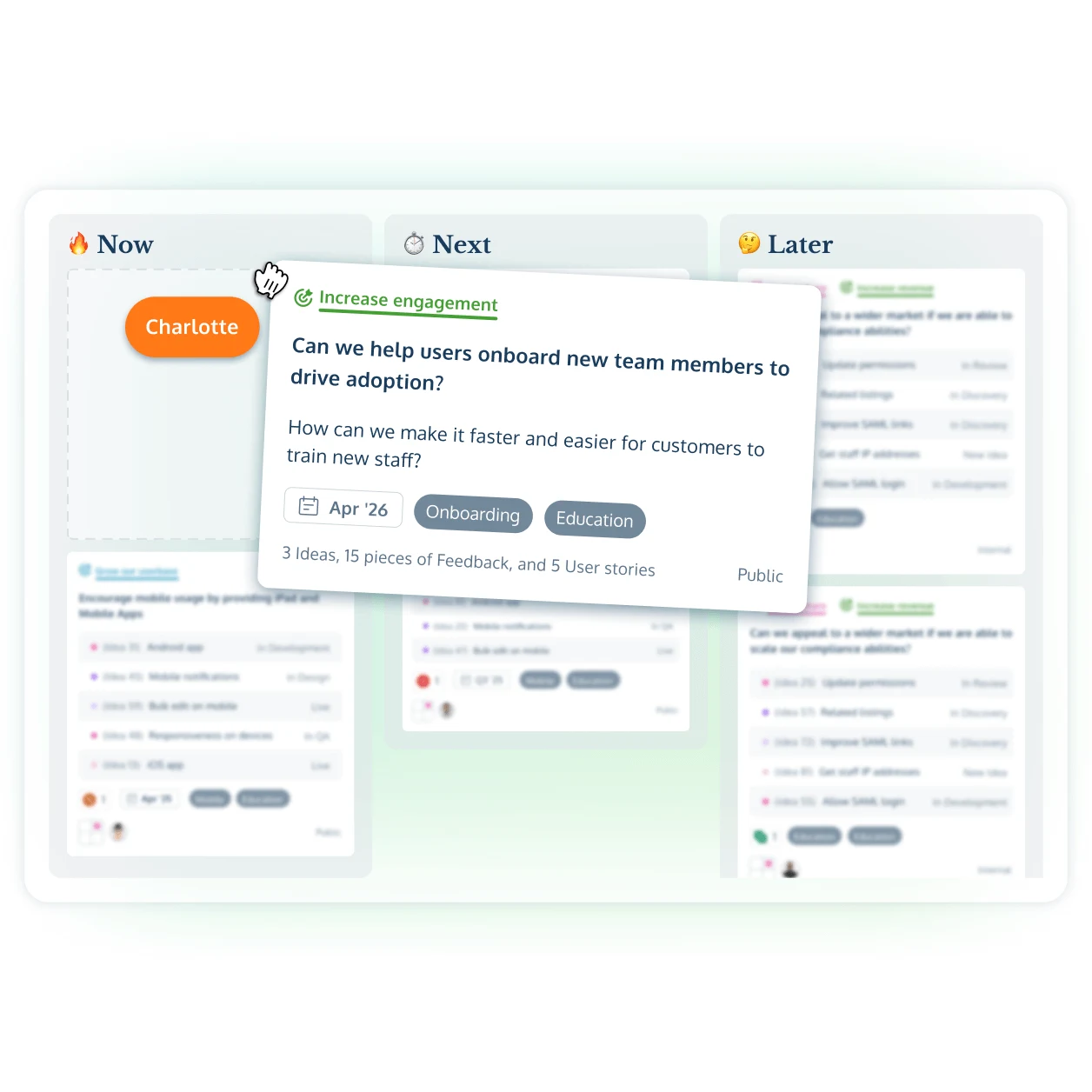
ProdPad now, next, later product roadmap with an initiative card
ProdPad connects initiatives, evidence, and outcomes in a dedicated now, next, later roadmap.

Where Jira fits better

Jira connects an accepted product decision to the teams and processes responsible for delivery.

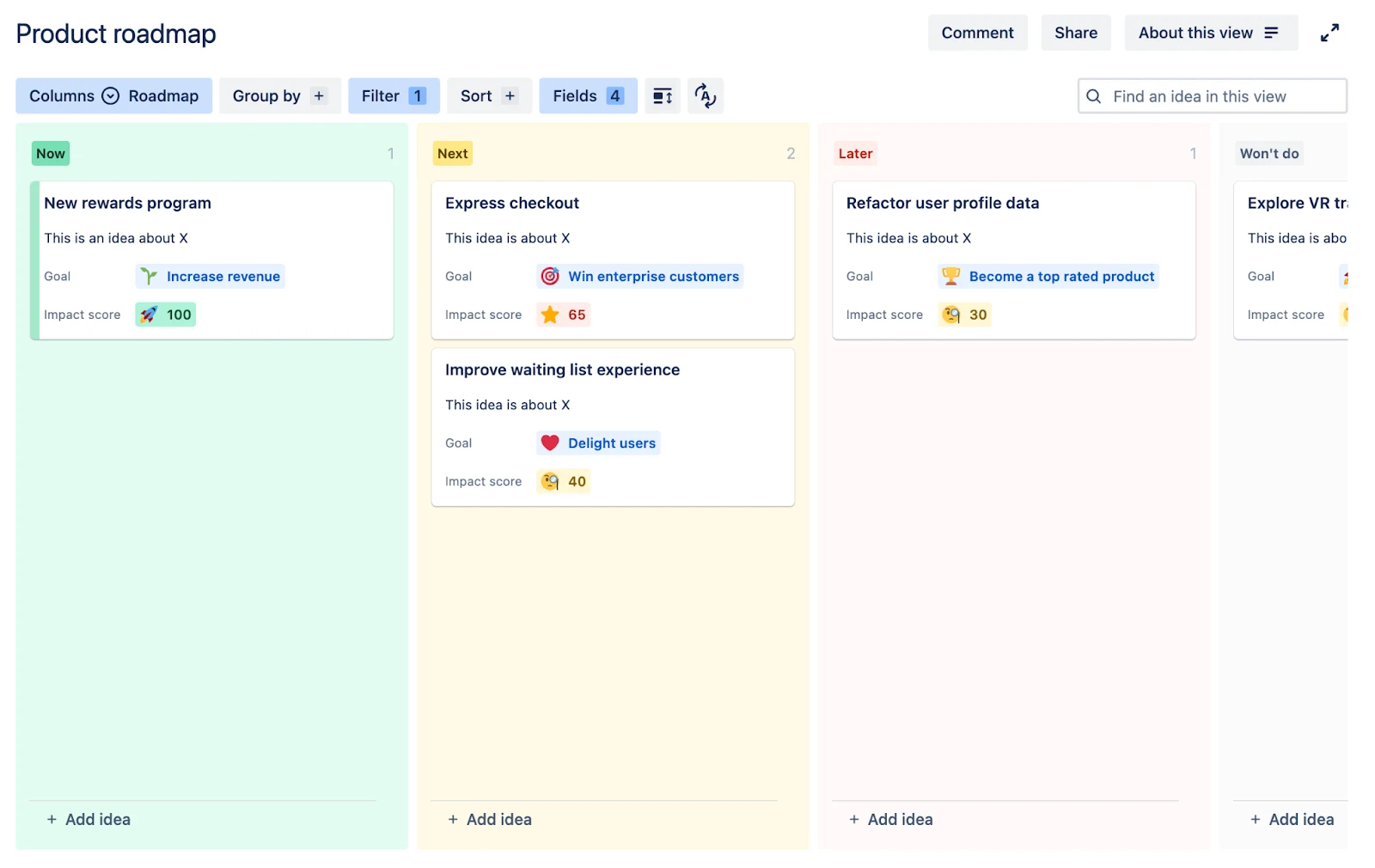
Jira Product Discovery board connecting product ideas with delivery planning
Jira Product Discovery keeps ideas, evidence, and delivery connections inside the Atlassian system.

Workflow comparison

How each setup works

The key decision is where discovery should end and committed delivery work should begin.

ProdPad + Jira

  1. Connect feedback, evidence, objectives, and candidate ideas in ProdPad.
  2. Prioritise an idea and send it to Jira when it becomes a delivery commitment.
  3. Sync delivery progress back to ProdPad for roadmap communication.

Jira + Released Hub

  1. Capture insights and compare solutions in Jira or Jira Product Discovery.
  2. Link the chosen idea to delivery and manage it through Jira workflows and releases.
  3. Publish customer-facing roadmaps and updates from the same Jira work with Released Hub.

Choose where discovery should become delivery

The decision is whether discovery needs a separate product system or should remain connected to Jira Product Discovery and Jira.

Use ProdPad when opportunity validation, outcome-led planning, and a dedicated discovery backlog justify a separate system and mapped handoff to engineering.

Use Jira Product Discovery with a customer layer when ideas, delivery, and customer communication should stay connected without another planning database.

Sources and verification

Documentation reviewed September 12, 2026. Documentation research informs this comparison. Product editions, permissions, and rollout availability can affect the experience.