All comparisons

Azure DevOps Boards vs Notion

Azure DevOps Boards suits engineering teams that want configurable work tracking connected to repositories, pipelines, testing, and Microsoft identity. Notion suits teams that want documents, wikis, and project databases together, with flexibility to design their own work-management structure.

Azure DevOps Boards

Best for engineering teams planning inside the Microsoft development ecosystem

  • Advantage: Can order backlogs at several hierarchy levels and move planned work into team iterations.
  • Advantage: Can plan sprints, compare team availability, and report on progress and expected completion.
  • Advantage: Can use connected code hosting, build, testing, and package tools within Azure DevOps.
  • Limitation: Can automate work through several tools, but these need separate setup and may have separate licence costs.
  • Limitation: Can query across projects and combine team plans; an individual board remains scoped to its team.

Notion

Best for teams combining project work with documents and a custom knowledge workspace

  • Advantage: Can keep documents, task tables, and discussions together on a page.
  • Advantage: Can add fields for status, people, dates, calculations, and links to other records.
  • Advantage: Can create public forms linked to database properties so responses become records; basic forms are available on all plans.
  • Limitation: Cannot require permissions or specific field values for each status change.
  • Limitation: Can build cross-project views using linked databases, summaries, and charts, but needs setup.

Feature comparison

✓ Supported · — Partially supported · × Not available.

Feature Azure DevOps Boards Notion
Pricing
Starting paid price Compare the entry paid plan, billing unit, and payment commitment.
$6/user/month for Basic users beyond the first five. Azure Boards is included.
From $10/seat/month, billed annually (Plus).
Free plan Compare what teams can use before moving to a paid plan.
The first five Basic users are free with full Azure Boards access; Stakeholder access is also free with reduced capabilities.
Free includes unlimited pages for individuals; collaborative workspaces have a block allowance and ten external guests.
Work structure and knowledge
Projects, tasks, and subtasks Organise work from individual tasks through projects and larger initiatives.
Supported
Supported
Custom fields Track information that is specific to the team’s work.
Supported
Supported
Custom work types Model different kinds of work with their own structure and fields.
Supported
Limited Can model different work using database properties and templates; work types are team-designed database structures.
Documents and knowledge Keep project documentation and long-form knowledge connected to tasks.
Limited Can maintain Markdown project wikis in Azure DevOps; the wiki is a separate surface alongside Azure Boards.
Supported
Whiteboards Connect visual brainstorming to project work.
Limited Can create, edit, and sync Azure Boards work items on Miro boards; requires the connected Miro Business or Enterprise product.
Limited Can embed live Miro boards; visual collaboration takes place in the connected Miro workspace.
Views and everyday work
Board and list layouts Switch between a board and a list of the same work.
Limited Can manage work in boards, backlogs, and query lists; these are separate planning surfaces.
Supported
Grouping by field Organise views by status, owner, or another work-item field.
Limited Can configure board columns, swimlanes, and team scope; grouping follows board and process settings rather than arbitrary fields in every view.
Supported
Cross-project views View work from several projects or teams together.
Limited Can query across projects and combine team plans; an individual board remains scoped to its team.
Limited Can bring project records together through linked databases and views; teams need a shared database model or linked structure.
Advanced filters Build precise views from several conditions.
Supported
Supported
Saved and shared views Save board or list settings and share them with other people.
Supported
Supported
Keyboard navigation and commands Navigate and act without reaching for the mouse.
Supported
Supported
Bulk editing Update several selected work items together.
Supported
Supported
Planning and reporting
Planning across teams Connect current delivery work with broader projects, initiatives, and plans.
Supported
Limited Can build cross-project views using linked databases, summaries, and charts, but needs setup. Inherited from jira-vs-notion, Planning and views: Cross-team plans. Sources were attributed at page level in the original comparison; claim-specific attribution needs review.
Progress reporting Understand delivery progress and performance through reports.
Supported
Limited Can build progress views using charts, rollups, and database properties; delivery reporting needs a designed database model.
Task dependencies Track blocking relationships between tasks and projects.
Supported
Supported
Workload and capacity Compare assigned work with team availability and capacity.
Supported
Limited Can group assignments and calculate workload using database properties and rollups; availability-aware capacity planning needs custom setup.
Goals and objectives Connect tasks and project progress to organisational goals.
Limited Can represent larger outcomes through epics, features, custom hierarchy, and fields; objective tracking follows the configured process model.
Limited Can model objectives and link them to work through related databases and rollups; teams configure the goal-tracking structure.
Time tracking Record time spent on work and review it in reports.
Limited Can record original estimates, remaining work, and completed work; timesheets and live timers require an additional solution.
Limited Can store time values and calculate summaries with properties and rollups; a dedicated live timer needs a separate implementation.
Sprint planning Plan repeating delivery periods with a backlog and sprint scope.
Supported
Supported
Sprint reporting Review burndown, velocity, and delivery trends with dedicated reports.
Supported
Limited Can track sprint work using task databases, charts, and formulas; formal velocity and burndown reporting needs setup.
Timeline and Gantt views Plan work against dates and see schedules and dependencies in a timeline or Gantt view.
Limited Can show multiple team backlogs, milestones, and dependencies on Delivery Plans timelines; the view is built around iterations and backlog items.
Limited Can show database items on a timeline and adjust linked task dates; dependency-aware scheduling is built on database relations.
Backlog management Maintain an ordered backlog and select work for upcoming delivery periods.
Supported
Limited Can organise tasks and assign current or future sprints in databases; teams configure the backlog views.
Workflow and intake
Automatic actions React to changes and automate multi-step processes.
Limited Can automate work through several tools, but these need separate setup and may have separate licence costs. Inherited from jira-vs-azure-devops, Workflow and automation: General automation. Sources were attributed at page level in the original comparison; claim-specific attribution needs review.
Supported
Rules for changing status Enforce allowed status transitions and require information before work can move to another stage.
Supported
Not available
Request forms Collect structured requests that create work items.
Limited Can capture structured work through authenticated work-item forms; a public intake form requires a connected implementation.
Supported
Custom statuses Define the stages that match each team’s process.
Supported
Supported
Approval steps Require approval from designated people before work can proceed.
Limited Can configure identity-based transition restrictions and required fields as approval gates; the team must configure the inherited process.
Not available
Access and administration
Project roles and permissions Control who can view, edit, and administer project work.
Supported
Supported
Individual work-item access Restrict an individual work item within an otherwise shared project.
Limited Can restrict access by project and area path; individual exceptions require an appropriately restricted area rather than an item-specific security scheme.
Limited Can give people access to assigned database records on Business and Enterprise, but broader inherited access still applies. Inherited from jira-vs-notion, Sharing and Jira integration: Private tasks in shared projects. Sources were attributed at page level in the original comparison; claim-specific attribution needs review.
Shared configuration Reuse managed fields and process settings across teams.
Supported
Supported
Integrations
Development integrations Connect planning with branches, pull requests, builds, and deployments.
Supported
Limited Can show Jira development tasks through synced databases and integrations. Inherited from jira-vs-notion, Workflow and automation: Code and release updates. Sources were attributed at page level in the original comparison; claim-specific attribution needs review.
Jira integration Connect work and updates with Jira projects.
Limited Can send Azure DevOps branches, commits, pull requests, builds, and deployments to Jira through the official app; full Azure Boards work-item synchronisation needs a separate connector.
Supported
API and webhooks Read and update work programmatically and receive events when it changes.
Supported
Supported

Azure DevOps Boards

Best for engineering teams planning inside the Microsoft development ecosystem

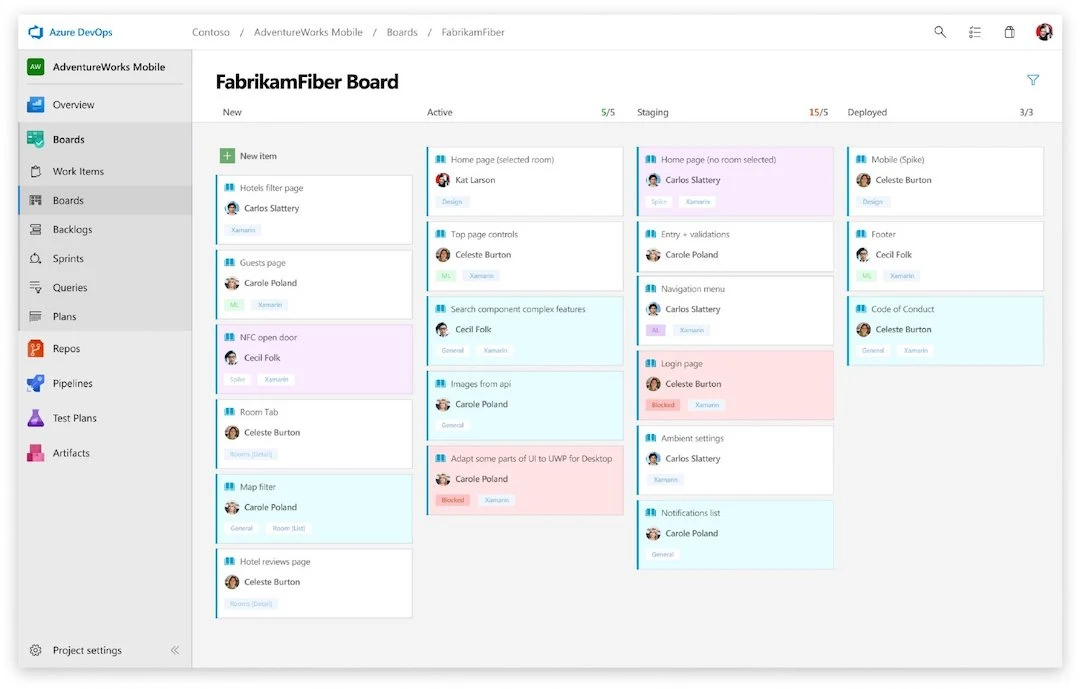
Azure DevOps board with repositories, pipelines, test plans, and artifacts in the project navigation
Azure Boards sits inside the wider Azure DevOps engineering suite, alongside repositories, pipelines, tests, and artifacts.

Hierarchical engineering backlogs

Can break large initiatives into features, requirements, tasks, and custom levels.

Sprint planning and capacity

Can plan sprints, compare team availability, and report on progress and expected completion.

Cross-team Delivery Plans

Can show work from several teams on one timeline, including milestones and dependencies.

Connected development services

Can use connected code hosting, build, testing, and package tools within Azure DevOps.

Notion

Best for teams combining project work with documents and a custom knowledge workspace

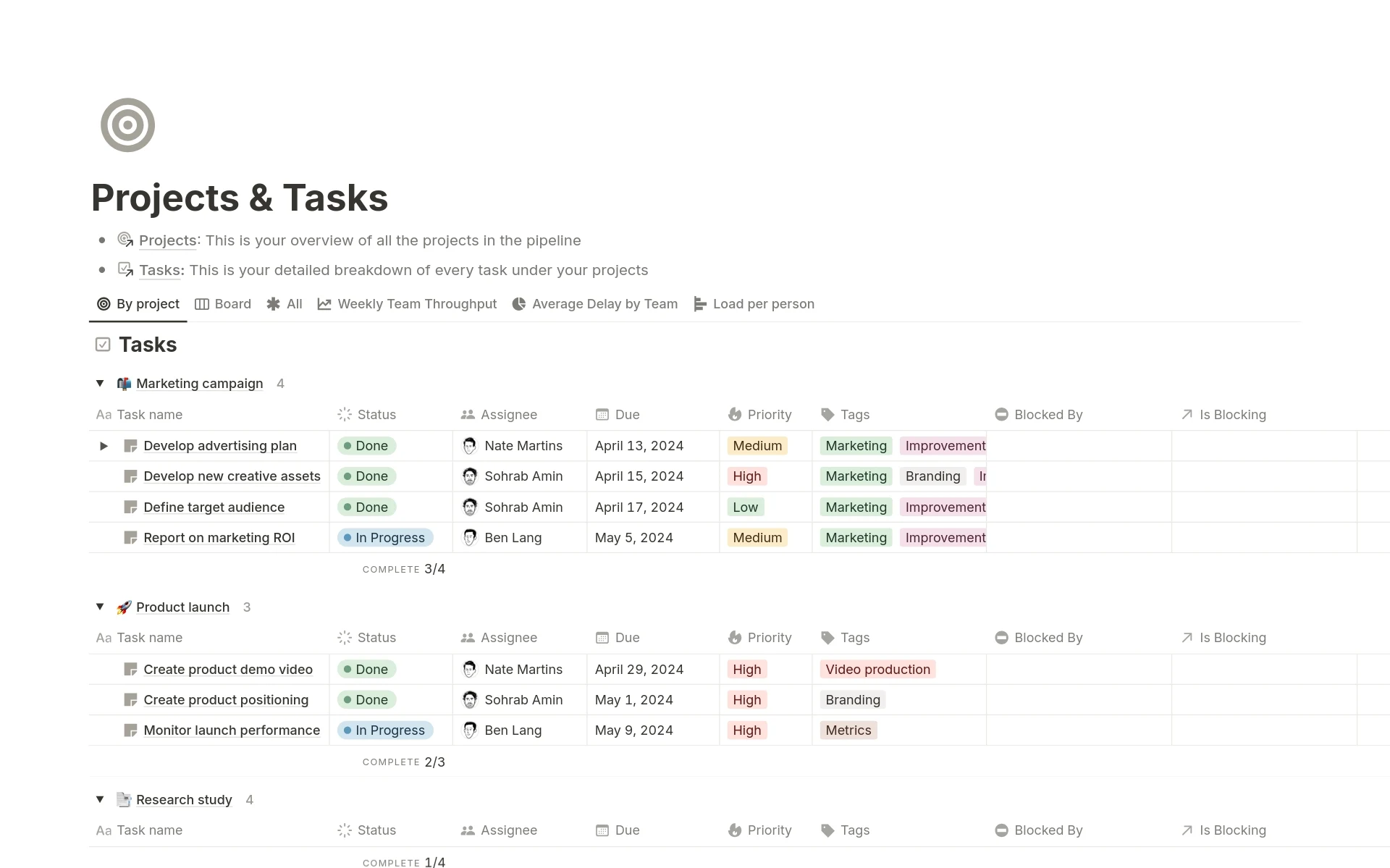
Notion projects and tasks database grouped by project
Notion combines project context and structured task data in a flexible page-based workspace.

Documents alongside project data

Can keep documents, task tables, and discussions together on a page.

Relational project databases

Can link records in different databases and summarise information from the linked records.

Multiple database views

Can view the same database as a table, board, list, timeline, calendar, gallery, chart, or feed.

Configurable task and sprint databases

Can plan current and future sprints in databases and automatically carry unfinished work forward.

Key differences

Capability
Azure DevOps Boards
Notion

Work structure and customisation

Compare how each product models projects, tasks, work types, and team-specific information.

Can configure board columns, swimlanes, and team scope; grouping follows board and process settings rather than arbitrary fields in every view. Can build work-item queries from field conditions and search across projects.

Can group database views by properties and add a second layer of grouping. Can combine database filters with nested AND and OR groups.

Workflow configuration

Consider whether the team needs a consistent status model or rules that govern how work moves between stages.

Can limit status changes by person or group and require fields before an approval step. Can configure identity-based transition restrictions and required fields as approval gates; the team must configure the inherited process.

Cannot require permissions or specific field values for each status change. Enforced approval steps are not available in Notion. Can automatically update pages, notify people, send emails, or call other services when something changes or on a schedule.

Access and extensibility

Review the permission model and the options for connecting or extending each product programmatically.

Can restrict access by project and area path; individual exceptions require an appropriately restricted area rather than an item-specific security scheme. Can control access by user group, project, and area of work.

Can give people access to assigned database records on Business and Enterprise, but broader inherited access still applies. Can control page and teamspace access, including access for guests.

Planning and portfolio scope

Consider how near-term execution connects to timelines, initiatives, dependencies, and broader organisational plans.

Can plan sprints, compare team availability, and report on progress and expected completion. Can show work from several teams on one timeline, including milestones and dependencies.

Can group assignments and calculate workload using database properties and rollups; availability-aware capacity planning needs custom setup. Can build cross-project views using linked databases, summaries, and charts, but needs setup.

Sources and verification

Documentation reviewed 2026-09-11 / 2026-09-16 / 2026-09-17. Based on product documentation and pricing sources.