
Product roadmaps: types, examples and planning steps
Learn what a product roadmap should communicate, choose a format for your audience, and turn product goals into a plan with worked examples.
On this page
What is a product roadmap?
A product roadmap explains which customer problems a team plans to solve, why they matter, and the order in which the team expects to tackle them. It connects product goals to planned work so customers, colleagues, and leaders can understand the decisions behind the plan.
Use this guide to choose a roadmap format, decide what belongs on it, and communicate priorities. For the setup steps in Jira, follow how to create a product roadmap in Jira. For customer access and audience-specific views, see how to share your Jira roadmap.
A worked example: help new customers finish setup
Suppose your team wants more trial customers to complete their first project. Support conversations show that imports fail, the setup steps are unclear, and administrators struggle to invite colleagues. An illustrative roadmap could look like this:
Scroll horizontally to follow the example.
| Horizon | Customer problem | Planned work | Evidence to review |
|---|---|---|---|
| Now | Customers cannot diagnose a failed import | Explain import errors and let customers retry | Import completion and related support requests |
| Next | Customers do not know which setup steps remain | Add a setup checklist | Setup completion and time to first project |
| Later | Administrators repeat invitations one at a time | Explore a bulk invitation workflow | Administrator interviews and invitation completion |
The goal stays visible while the proposed work can change as the team learns. “Later” expresses an area to explore; it is not a promised delivery date. Put implementation tasks and sprint commitments in the delivery plan, linked to these roadmap items.
Why are product roadmaps important?
A useful roadmap gives each audience enough context to understand the priorities and ask better questions:
Getting Everyone on the Same Page
A roadmap ensures that everyone knows the product vision and their role in achieving it. No more “What’s next?” confusion.
Setting Priorities
It highlights the most important features and initiatives, so your team knows where to focus their efforts.
Communicating Strategy
A roadmap is a visual way to share your strategy with stakeholders, making it easier to explain your plan.
Tracking Progress
It helps you monitor development and make adjustments as needed to stay on course.
Takeaways
In short, a product roadmap keeps your team aligned, focused, and informed. Plus, it makes it easier to communicate your strategy to anyone who needs to know.
Types of product roadmaps
When it comes to product roadmaps, one size definitely does not fit all. Different teams and projects have different needs, so it’s important to choose the type that suits your situation best. Let’s look at some of the most common types of product roadmaps:
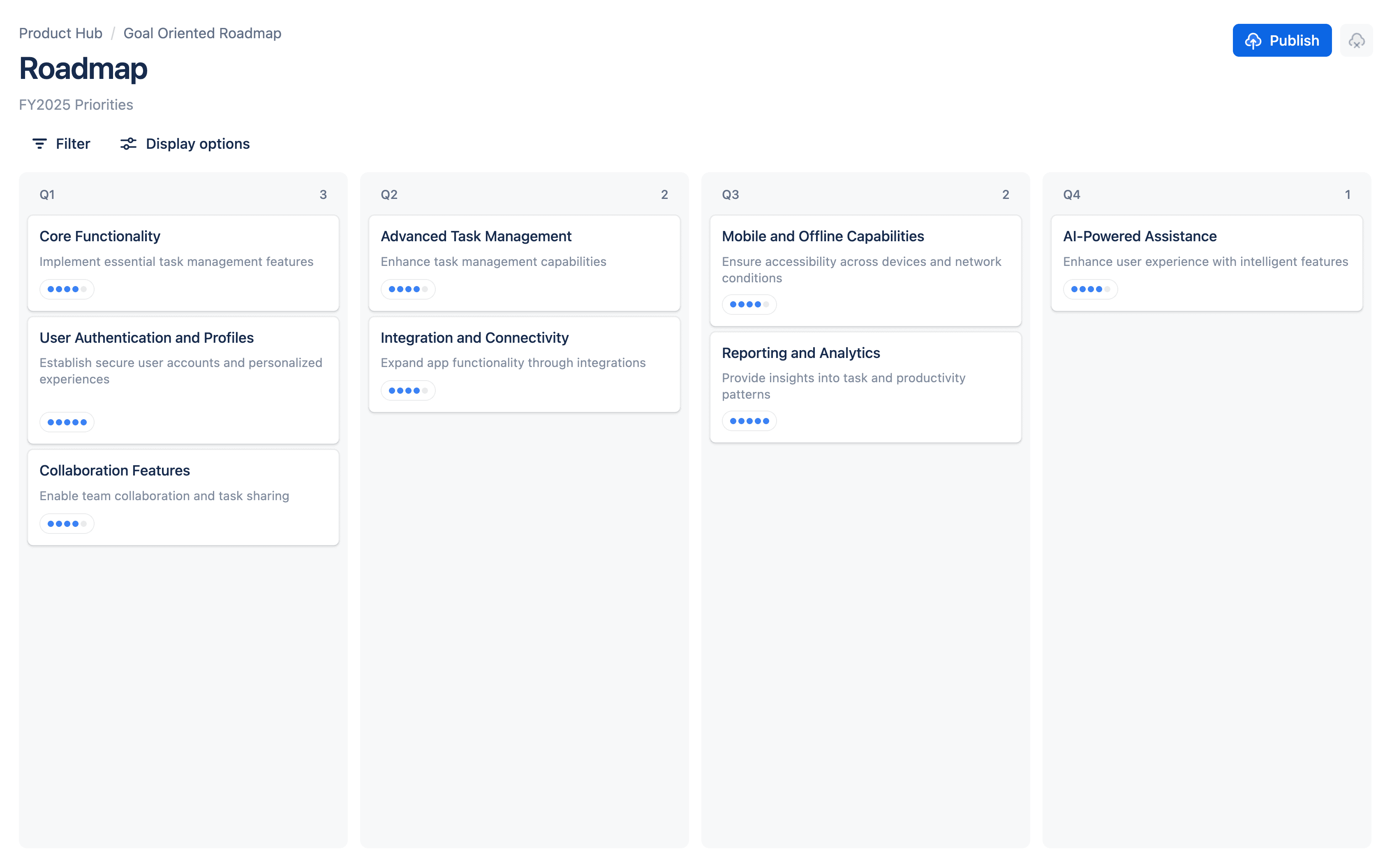
Goal-oriented roadmaps
Goal-oriented roadmaps are all about the big picture. Instead of getting bogged down in the details, they focus on the high-level goals and outcomes you want to achieve. Use this format when you need to explain which customer or business outcome each initiative supports.
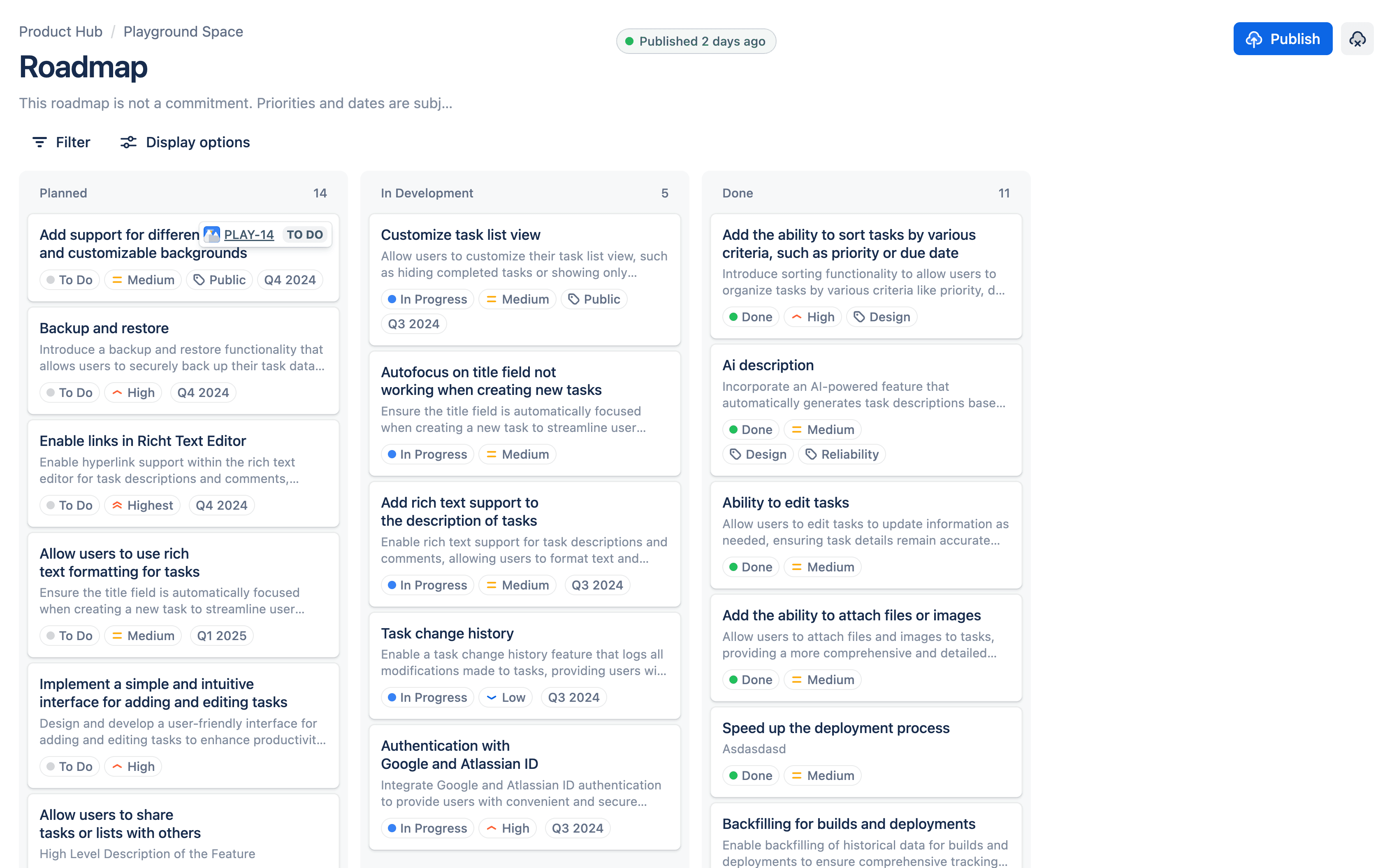
Feature-based roadmaps
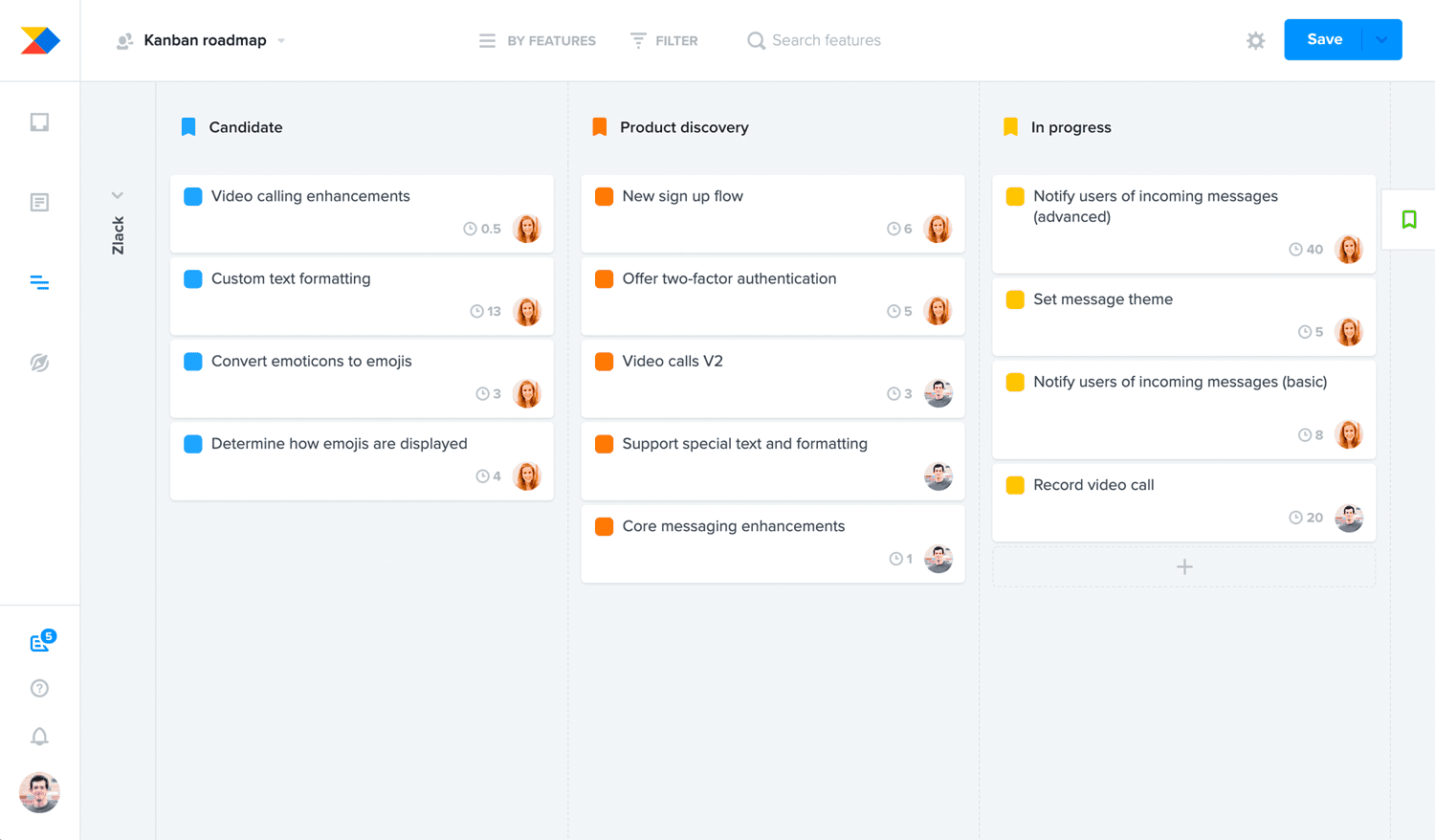
If you love details, a feature-based roadmap might be for you. This type is all about the specific features and functionalities you’ll be developing. It’s great for teams that need to communicate detailed plans to stakeholders who are interested in the nitty-gritty aspects of product development.
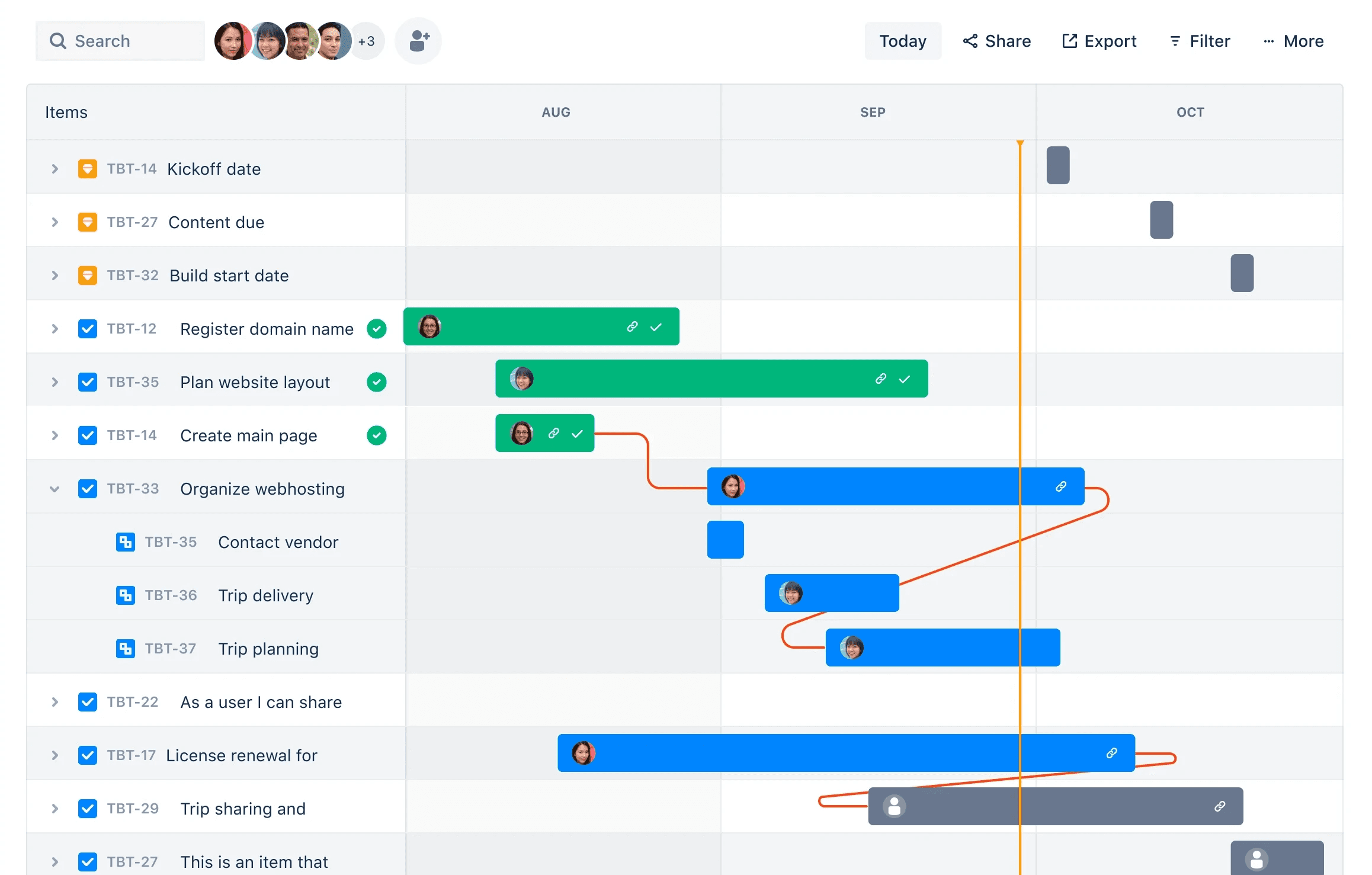
Time-based roadmaps
Time-based roadmaps are organized around specific timeframes—like quarters or months. They’re perfect for planning releases and ensuring that the development team stays on schedule. Use dates when they help coordinate dependencies, and distinguish estimates from commitments.
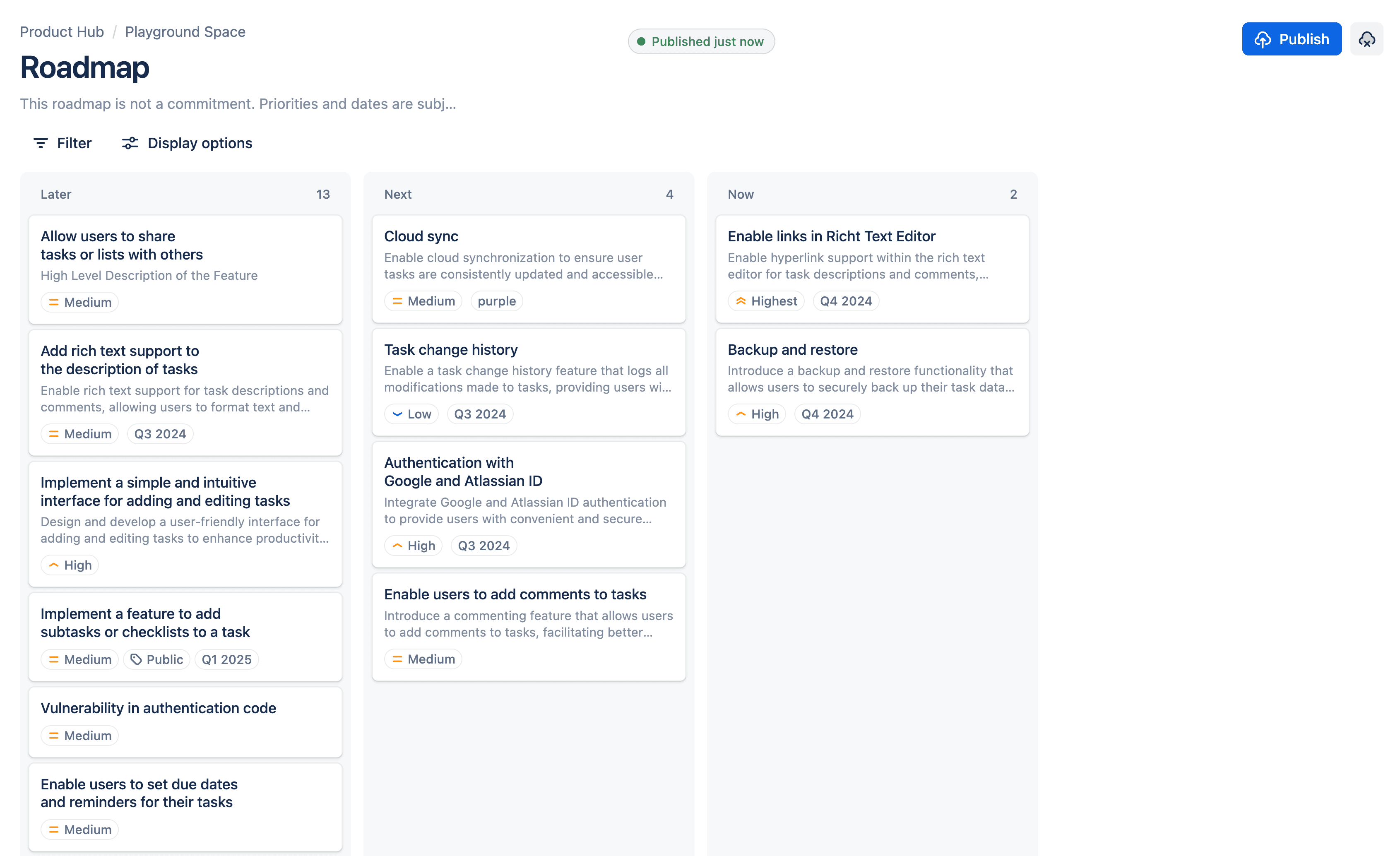
Now/next/later roadmaps
Now/Next/Later roadmaps are super flexible. They categorize tasks and features into three broad time horizons: what the team is working on now, what’s coming up next, and what’s planned for later. This type of roadmap is great if your priorities change frequently and you need to adjust on the fly.
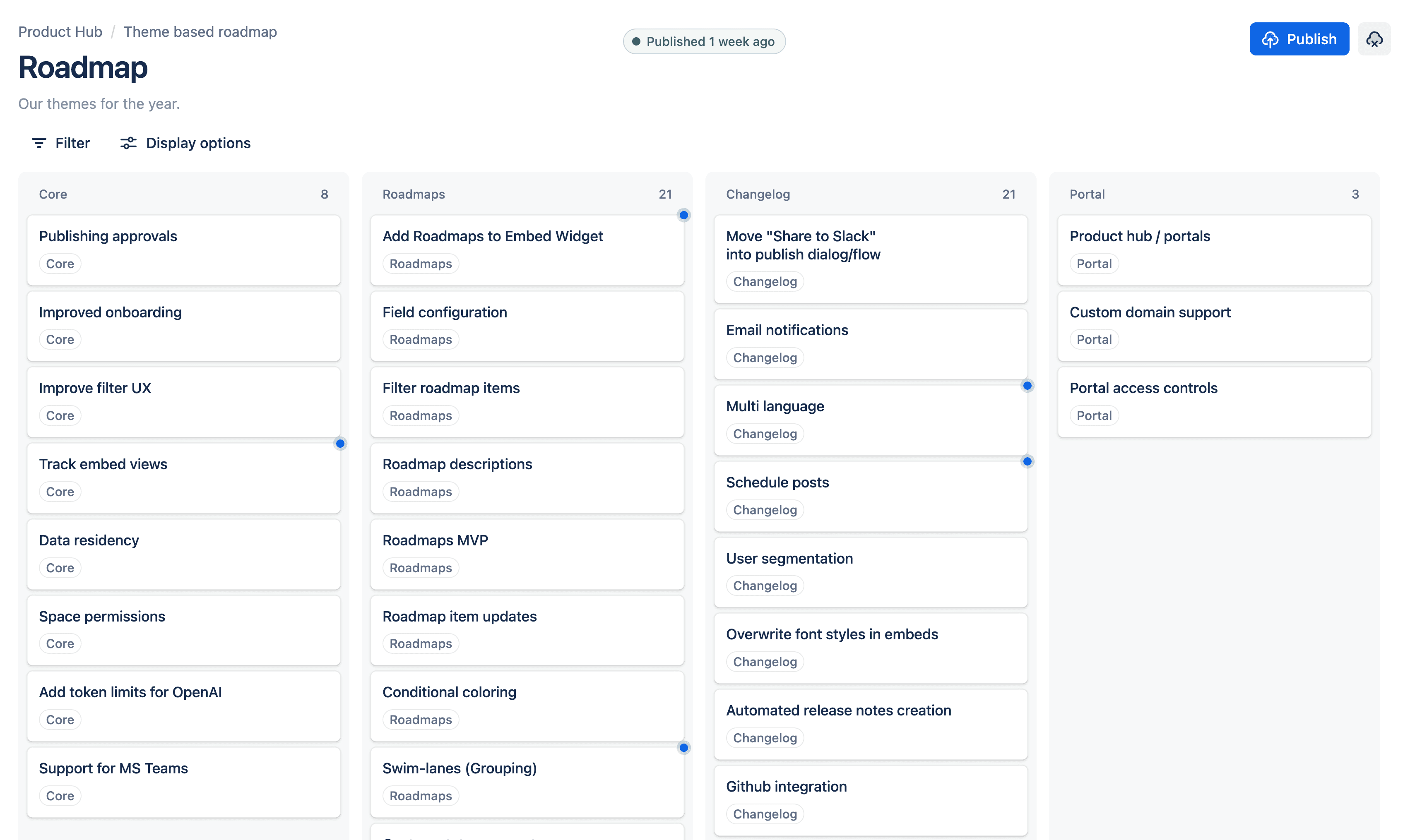
Theme-based roadmaps
Theme-based roadmaps group features and initiatives around broader themes or objectives. Instead of focusing on individual features, you look at the bigger picture. This type helps ensure that your product development aligns with strategic goals, like increasing user engagement or improving performance.
Takeaways
Choosing the right type of roadmap can make a huge difference in how effectively you communicate your product strategy and keep your team on track. So, take a moment to think about what will work best for your specific needs and go from there.
Key elements of an effective roadmap
Creating a product roadmap is more than just laying out a plan; it’s about making sure that plan is effective and actionable. Here are some key elements that every successful product roadmap should have:
Clear objectives and goals
First things first, your roadmap needs to start with well-defined objectives and goals. Each initiative should explain how it contributes to a goal. These goals should align with your overall business strategy and provide a clear direction for your product team. Whether it’s increasing user engagement, boosting revenue, or expanding into new markets, having clear goals helps everyone understand what you’re working towards.
Prioritized features or themes
Not everything can be a top priority, and that’s okay. An effective roadmap prioritizes the most important features or themes, ensuring that your team focuses on what truly matters. Use prioritization techniques like MoSCoW (Must have, Should have, Could have, Won’t have) or RICE (Reach, Impact, Confidence, Effort) to help rank your initiatives. This way, you can allocate resources more efficiently and make sure the most critical tasks get done first.
Flexible timeframes
While it’s essential to have a timeline, flexibility is key. A good product roadmap allows for adjustments as priorities change or unexpected challenges arise. Revisit the sequence when evidence, dependencies, or capacity change. This flexibility ensures that your roadmap remains relevant and adaptable to new information or market conditions.
Alignment with company strategy
Your product roadmap should never exist in a vacuum. It needs to align with your company’s overall strategy and objectives. This means making sure that your product development efforts contribute to broader business goals. For example, if your company is focused on customer retention, your product roadmap should include features that enhance user experience and loyalty. This alignment ensures that everyone is rowing in the same direction, making it easier to achieve your overarching goals.
Creating a product roadmap
Start with the outcome you want to change, then decide which problems to investigate and which work to commit to. These planning steps apply whichever tool you use; the Jira roadmap guide covers the configuration.
- Define Your Vision and Strategy
Start by understanding what you want to achieve with your product. This vision will be your guiding light, helping you make decisions and prioritize tasks.
- Gather Stakeholder Input
Creating a roadmap isn’t a solo mission. It’s essential to gather input from various stakeholders to ensure the roadmap aligns with their needs and expectations. This means involving:
-
Product Team: Developers, designers, product managers and marketers who will be executing the plan.
-
Executives: Ensuring the roadmap supports the company’s strategic goals.
-
Customers: Gathering feedback to make sure the roadmap addresses their pain points and needs.
- Prioritize Initiatives
Not everything can be a top priority. While frameworks like MoSCoW and RICE are great starting points, they’re not silver bullets. The number one priority should always be alignment with your company’s goals and strategy. Here’s a deeper dive into how to effectively prioritize:
-
Alignment with Company Goals: Ensure that every feature or initiative you consider aligns with your overarching business objectives. If your company is focused on customer retention, prioritize features that enhance user experience and build loyalty. This alignment ensures that your product development efforts contribute to the broader business goals.
-
Continuous Product Discovery: Prioritization isn’t a one-time task; it’s an ongoing process. Continuous product discovery involves regularly engaging with customers, gathering feedback, and iterating on your product. This helps you stay responsive to market changes and evolving customer needs. By keeping your finger on the pulse of your users, you can make more informed prioritization decisions.
-
Balancing Multiple Inputs: In addition to company goals and customer feedback, consider other inputs like market trends, technological advancements, and competitive landscape. Prioritization is about finding the right balance between these various factors to ensure you’re working on the most impactful initiatives.
By considering these elements along with frameworks like MoSCoW and RICE, you can create a more dynamic and responsive prioritization process that truly drives your product forward.
- Choose the Right Format
Select the type of roadmap that best fits your needs. Whether it’s goal-oriented, feature-based, or time-based, the right format will make your roadmap more effective and easier to understand.
- Create the Roadmap
Use a roadmapping tool to create a visual representation of your plan. This makes it easier to communicate your strategy and keep everyone aligned. There are several tools available to help you create and manage your product roadmap. We’ve listed a few popular ones below.
- Communicate the Roadmap
Share the roadmap with your team and stakeholders using a tool like Released Hub. Make sure everyone understands the plan and their role in executing it. Regular communication keeps everyone on the same page and helps manage expectations.
Best practices for product roadmaps
Creating a product roadmap is one thing, but ensuring it’s effective and useful requires some thought. Here are some tips to help you get the most out of your product roadmap:
Keep it Simple and Clear.
Your roadmap should be easy to understand at a glance. Avoid jargon and overly complex details. Use clear labels, simple visuals, and straightforward language. Remember, the goal is to communicate your plan, not to overwhelm your audience with information.
Be Flexible.
A roadmap is a living document. As market conditions change, customer needs evolve, and new information becomes available, be prepared to adjust your roadmap. Regularly review and update it to ensure it remains relevant and accurate.
Communicate Regularly.
Don’t just create a roadmap and forget about it. Regularly communicate updates to your team and stakeholders. This keeps everyone aligned and informed about changes, progress, and new priorities. Consider holding periodic roadmap review meetings to discuss updates and gather feedback.
Involve the Team.
Your roadmap should be a collaborative effort. Involve your team in the creation and updating process. This ensures that everyone has a sense of ownership and understands their role in executing the plan. Plus, your team can provide valuable insights and feedback that can improve the roadmap.
Align with Company Strategy. Always ensure that your roadmap aligns with the broader company strategy and goals. This alignment helps ensure that your product efforts are contributing to the overall success of the business. Regularly check that your roadmap reflects the strategic priorities of the company.
Use Data to Drive Decisions. Whenever possible, base your roadmap decisions on data. This could include user feedback, market research, analytics, and other relevant data sources. Data-driven decisions help ensure that your roadmap is focused on initiatives that will have the most significant impact.
Prioritize Ruthlessly.
Not everything can be a priority. Be ruthless in your prioritization to ensure that your team is focused on the most critical tasks. Use prioritization frameworks like MoSCoW and RICE, but always remember to align with company goals and strategy.
Maintain Transparency.
Keep your roadmap transparent to all relevant stakeholders. This builds trust and ensures that everyone is on the same page. Use tools that allow easy sharing and collaboration, so stakeholders can access the latest version of the roadmap anytime.
Focus on Outcomes, Not Outputs.
Shift your focus from just delivering features (outputs) to achieving specific outcomes. What value will a feature bring to your users? How will it help achieve your strategic goals? This outcome-focused approach ensures that your roadmap is truly driving value.
Public vs internal roadmaps
When it comes to product roadmaps, one size definitely does not fit all. Depending on your audience, you might need different versions: a public roadmap for external stakeholders and an internal roadmap for your team. Here’s a breakdown of the key differences and best practices for each.
Public roadmaps
Purpose
Public roadmaps are designed to share your product’s future direction with external stakeholders, such as customers, partners, and investors. They help build trust, manage expectations, and generate excitement about upcoming features.
Key elements
High-Level Overview: Focus on broader themes and significant milestones rather than detailed tasks. This keeps the roadmap easy to digest for a wide audience.
Customer-Centric: Highlight features and updates that are most relevant to your customers. This shows that you’re listening to their feedback and prioritizing their needs.
Timelines: Use broad timeframes (e.g., quarters) instead of specific dates to allow for flexibility and avoid over-promising.
Visual Appeal: Make it visually engaging with clear categories, icons, and colors. Tools like ProductPlan or Trello can help create attractive, easy-to-share public roadmaps.
Best practices
Transparency: Be open about what’s coming next, but manage expectations by clearly communicating that timelines and priorities may change.
Feedback Loop: Use your public roadmap as a tool to gather feedback from customers. This can help validate your plans and make necessary adjustments.
Regular Updates: Keep your public roadmap current. Regularly update it to reflect changes and new priorities, ensuring that your audience always has the latest information.
Internal roadmaps
Purpose
Internal roadmaps are for your product team and other internal stakeholders. They provide a detailed view of your product development plan, helping to coordinate efforts and ensure everyone is aligned.
Key elements
Detailed Tasks: Include specific tasks, deadlines, and responsible team members. This level of detail helps your team understand exactly what needs to be done and when.
Dependencies: Highlight dependencies between tasks to ensure that everyone is aware of what needs to happen before they start their work.
Metrics and KPIs: Include key performance indicators and metrics to track progress and measure success. This helps keep the team focused on outcomes rather than just outputs.
Flexible Timeframes: While more detailed than a public roadmap, maintain some flexibility to adapt to changes and new information.
Best practices
Collaboration: Use tools like Jira, Asana, or Aha! that facilitate collaboration and allow team members to update progress in real-time.
Regular Reviews: Hold regular roadmap review meetings to discuss progress, address challenges, and make necessary adjustments.
Alignment: Ensure that your internal roadmap aligns with your company’s strategic goals and the feedback received from your public roadmap.
Balancing both roadmaps
While public and internal roadmaps serve different purposes, they should be aligned. Your internal roadmap will have more detail, but the high-level goals and themes should match what you’re communicating publicly. This consistency ensures that there are no surprises for your customers or team members.
Share a view for each audience
With Released Hub roadmaps, choose which Jira work and details to share with each audience. See the Jira roadmap sharing guide for the workflow and access options.
Tools and software for product roadmaps
Having the right tools can make all the difference in creating and maintaining effective product roadmaps. Here are some of the top tools and software that product managers can use to streamline their roadmapping processes.
Need help choosing between a Jira-first setup, a dedicated product platform, or a lightweight planning tool? Read our product roadmap tools comparison.
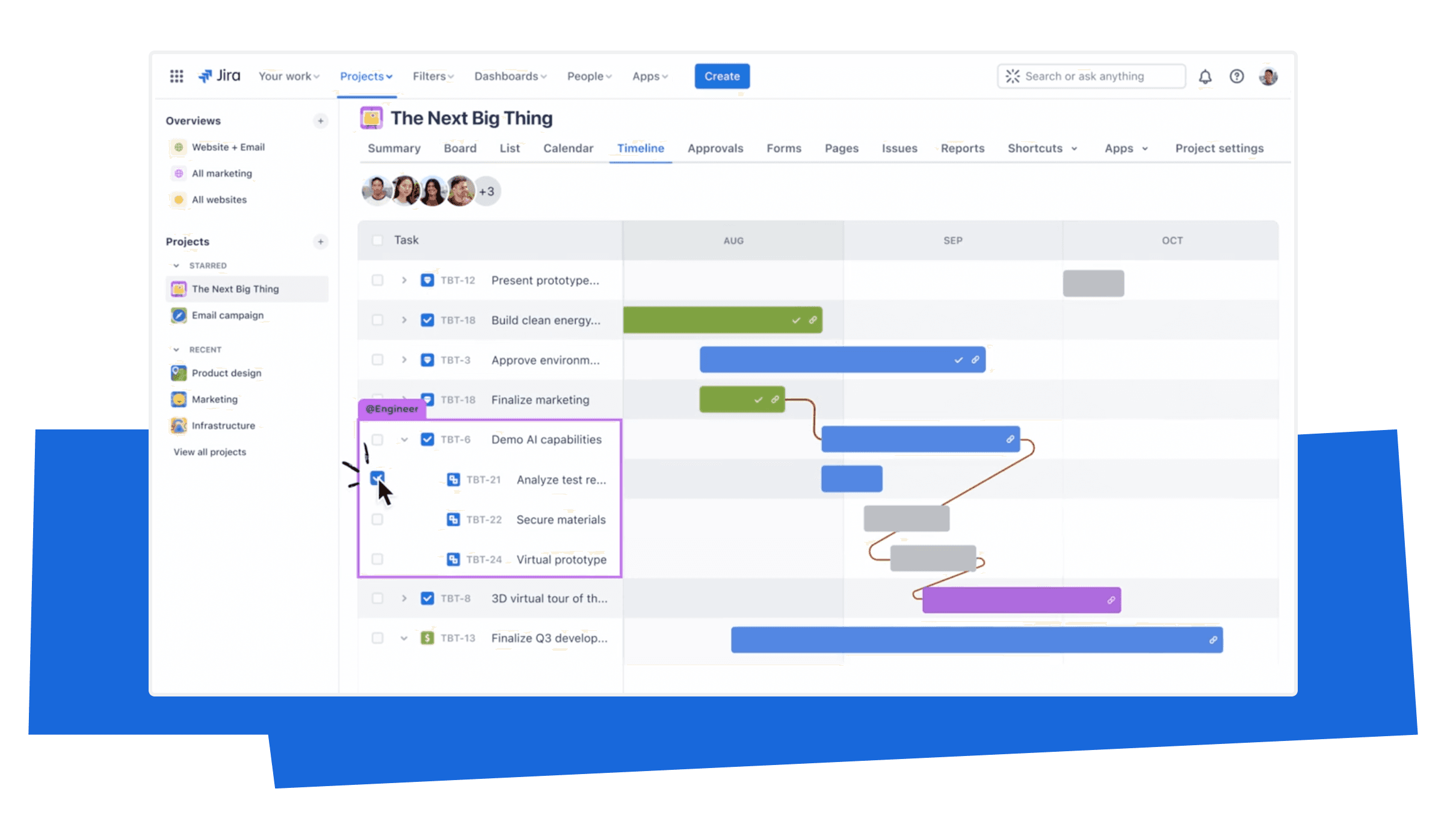
Jira
Jira is a powerful project management tool widely used by software development teams. While it’s known for issue tracking, it also offers robust roadmapping capabilities.
Key features
Backlog Management: Easily prioritize and manage your backlog.
Roadmap Planning: Visualize your roadmap and track progress with detailed timelines.
Agile Support: Supports Scrum, Kanban, and other Agile methodologies.
Integrations: Seamlessly integrates with other Atlassian products like Confluence and Bitbucket
Best for
Teams already using Jira for project management who want to integrate their roadmapping process.
Jira Product Discovery
Jira Product Discovery is a tool specifically designed for higher-level product planning and discovery. It complements Jira by focusing on the ideation, prioritization, and validation phases of product management.
Key features
Idea Management: Capture and organize ideas from various sources.
Prioritization: Use built-in frameworks to prioritize ideas based on impact and effort.
Customer Feedback: Integrate customer feedback to validate ideas and ensure alignment with user needs.
Visualization: Create visual roadmaps to communicate high-level plans and strategic direction.
Collaboration: Collaborate with stakeholders and team members to refine and prioritize ideas.
Best for
Product managers looking for a tool to manage the early stages of product planning and discovery, ensuring that high-level strategic direction is well-defined before moving to detailed project management in Jira.
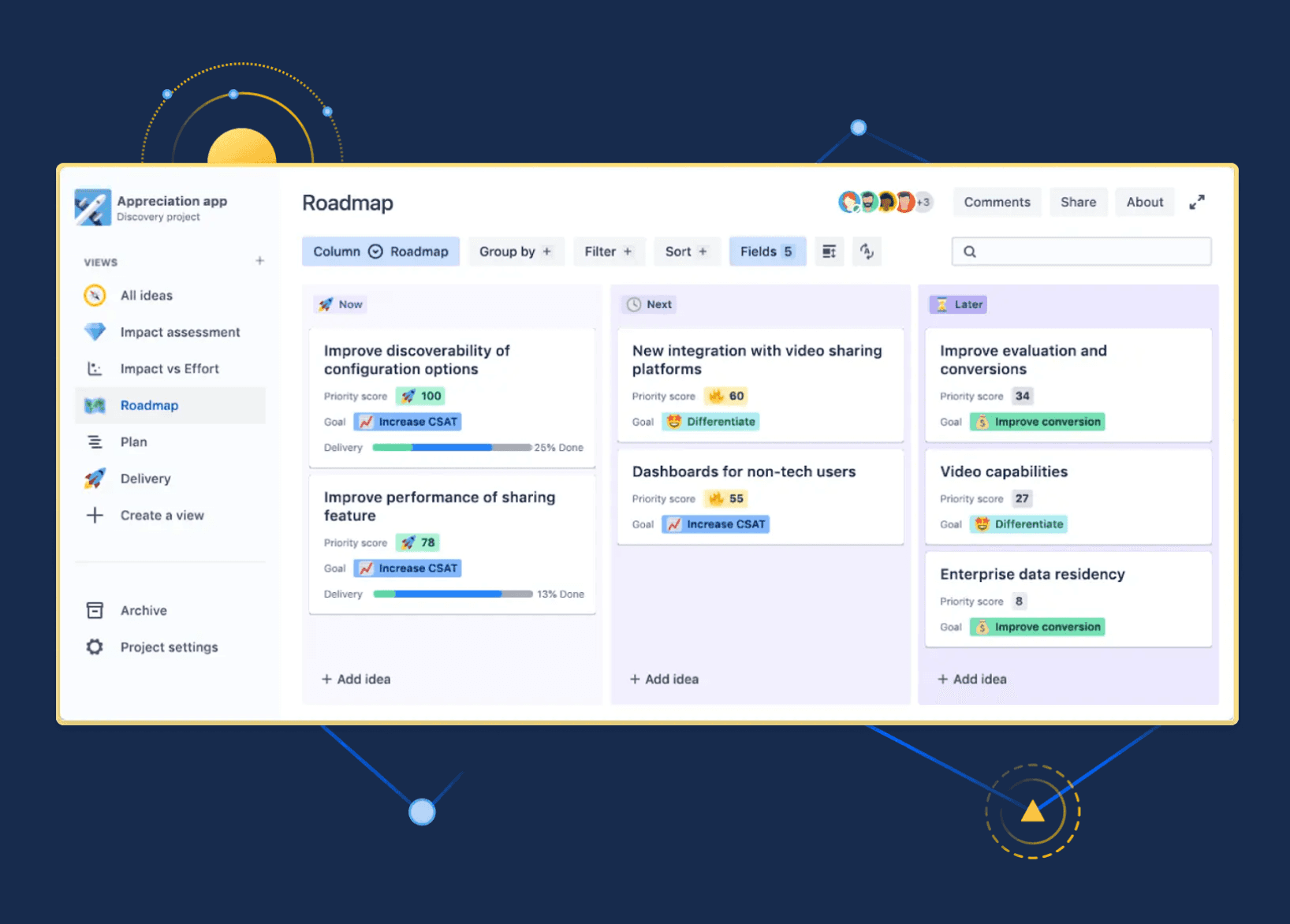
Differences between Jira and Jira Product Discovery
**Jira:**Optimized for detailed project management, issue tracking, and sprint planning. Ideal for development teams managing day-to-day tasks and progress.
**Jira Product Discovery:**Designed for higher-level planning, ideation, and validation. Focuses on capturing and prioritizing product ideas, aligning them with strategic goals, and preparing them for execution in Jira.
Released Hub
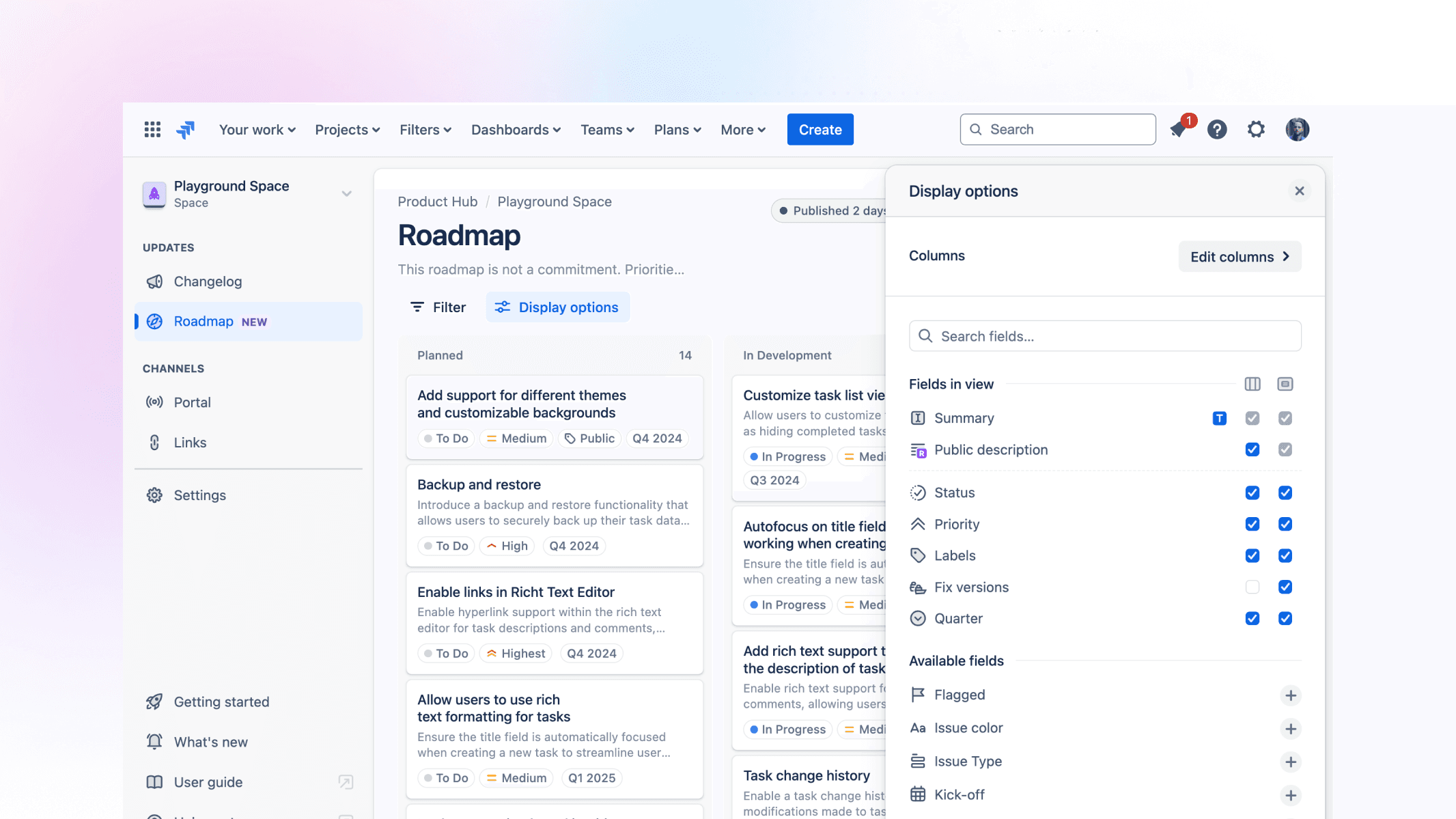
Released Hub is an app for Jira that integrates seamlessly with both Jira and Jira Product Discovery. It makes it easy to create roadmaps from Jira issues and ideas, and share them with stakeholders internally and with customers externally.
Key features
Integration with Jira and Jira Product Discovery: Pull issues and ideas from Jira and Jira Product Discovery to create comprehensive roadmaps.
Customizable Views: Create simple and lightweight views of your internal Jira roadmaps in seconds. Customize columns and display options to tailor the roadmap to your audience.
Filtering Options: Filter issues by type, label, version, or use Jira Query Language (JQL) to create custom views.
Shareable Roadmaps: Easily share roadmaps with your team, stakeholders, or customers via a portal or through embedding the roadmaps directly into your website or app.
Best for
Product teams looking to streamline their roadmapping process and provide transparent, engaging updates to users and stakeholders, directly from Jira and Jira Product Discovery.
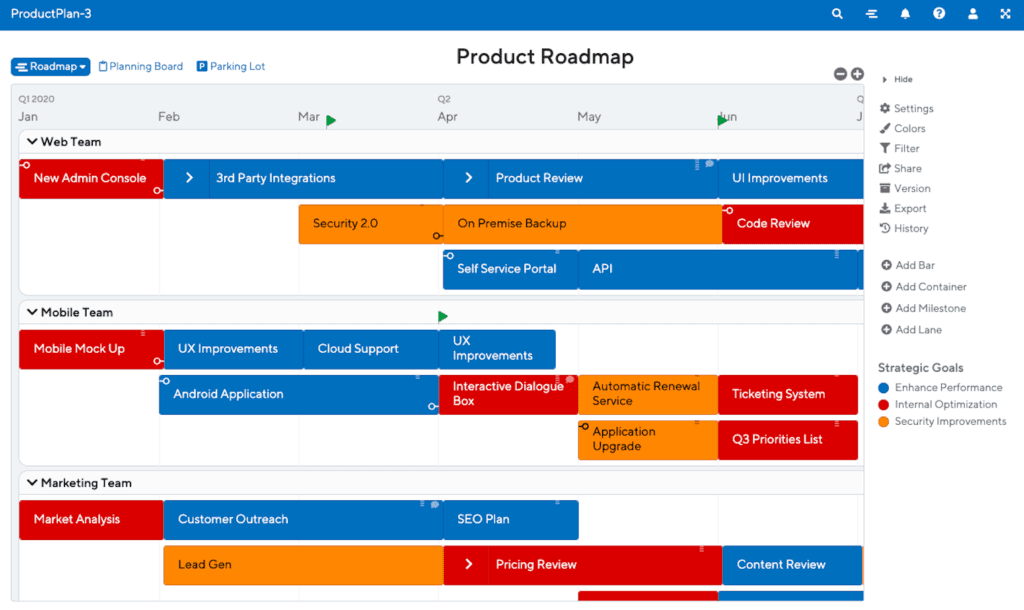
ProductPlan
ProductPlan
ProductPlan is a versatile and user-friendly tool designed specifically for building product roadmaps. It offers a drag-and-drop interface, making it easy to create and share visually appealing roadmaps.
Key features
Customizable Templates: Choose from a variety of templates to get started quickly.
Collaboration: Allows multiple team members to collaborate in real-time.
Integrations: Integrates with popular project management tools like Jira, Trello, and Slack.
Sharing Options: Easily share roadmaps with stakeholders through a URL or export them as PDFs.
Best for
Product managers looking for a dedicated roadmapping tool with robust collaboration and sharing features.
Aha!
Aha!
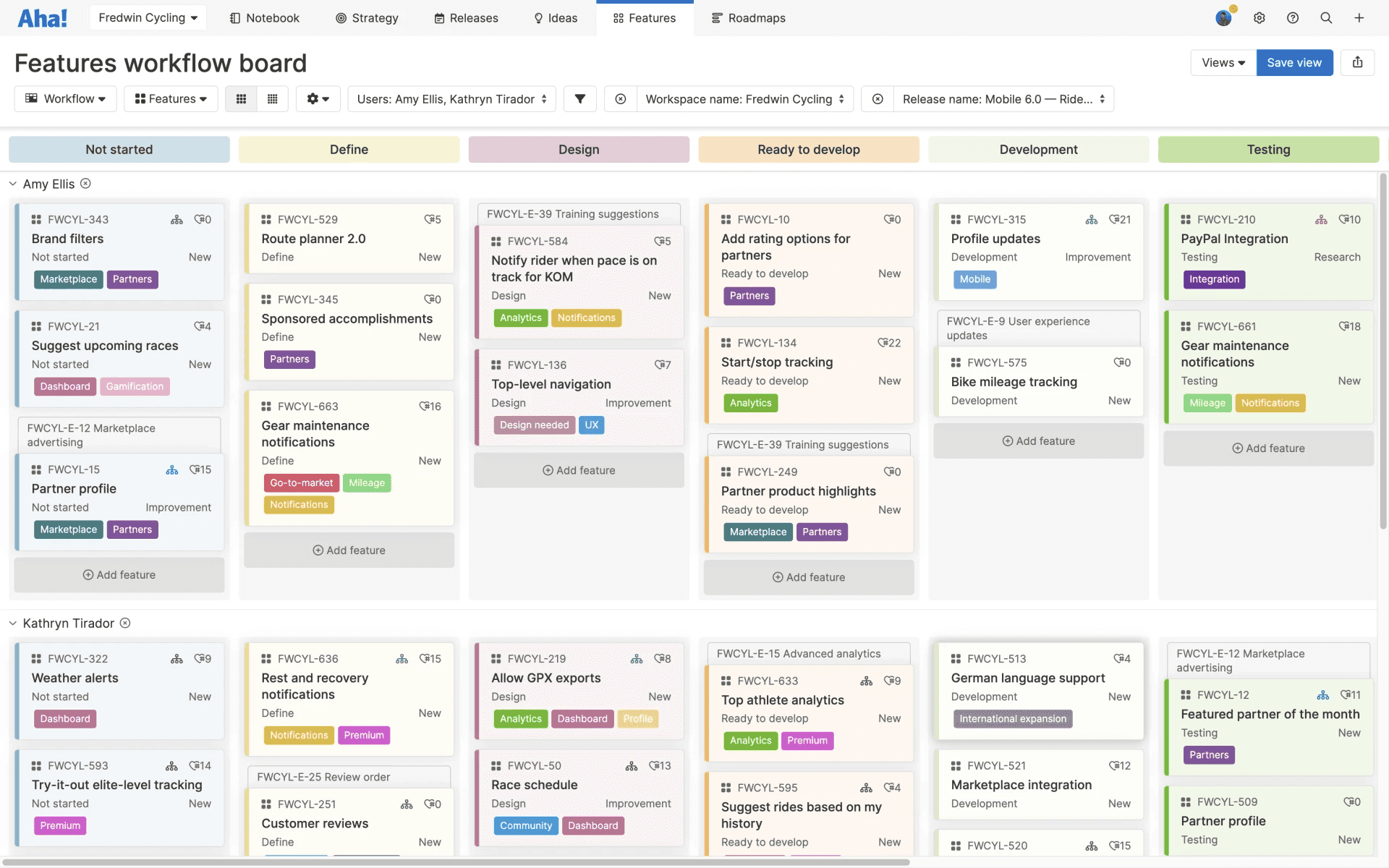
Aha! is a comprehensive product management suite that includes powerful roadmapping features. It’s designed to help you set strategy, prioritize work, and create detailed roadmaps.
Key features
Strategic Planning: Link your roadmap to your strategic goals.
Feature Prioritization: Use built-in prioritization frameworks to rank features.
Custom Views: Create custom views and reports to meet your specific needs.
Collaboration: Collaborate with team members and gather feedback directly within the tool.
Best for
Product managers looking for an all-in-one product management solution with advanced roadmapping capabilities.
Trello
Trello
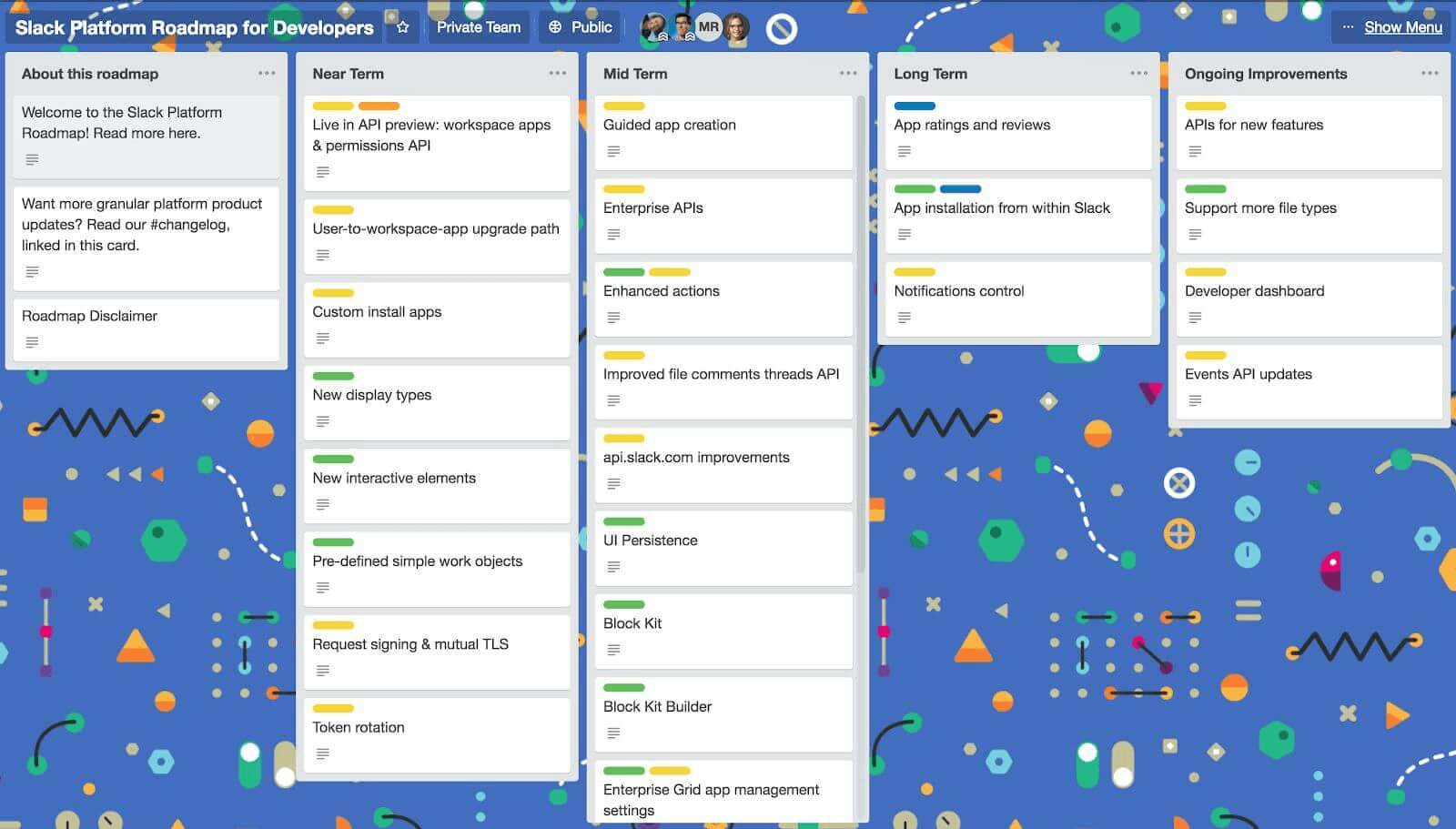
Trello is a flexible and visual project management tool that can be used for roadmapping. Its card-based interface makes it easy to organize tasks and timelines.
Key features
Boards, Lists, and Cards: Organize your roadmap into boards, lists, and cards for a visual representation of your tasks.
Custom Labels: Use labels to categorize and prioritize tasks.
Power-Ups: Enhance functionality with Power-Ups for integrations and additional features.
Collaboration: Team members can comment, attach files, and update progress in real-time.
Best for
Teams looking for a simple, visual tool to create and manage their roadmaps.
Roadmunk
Roadmunk
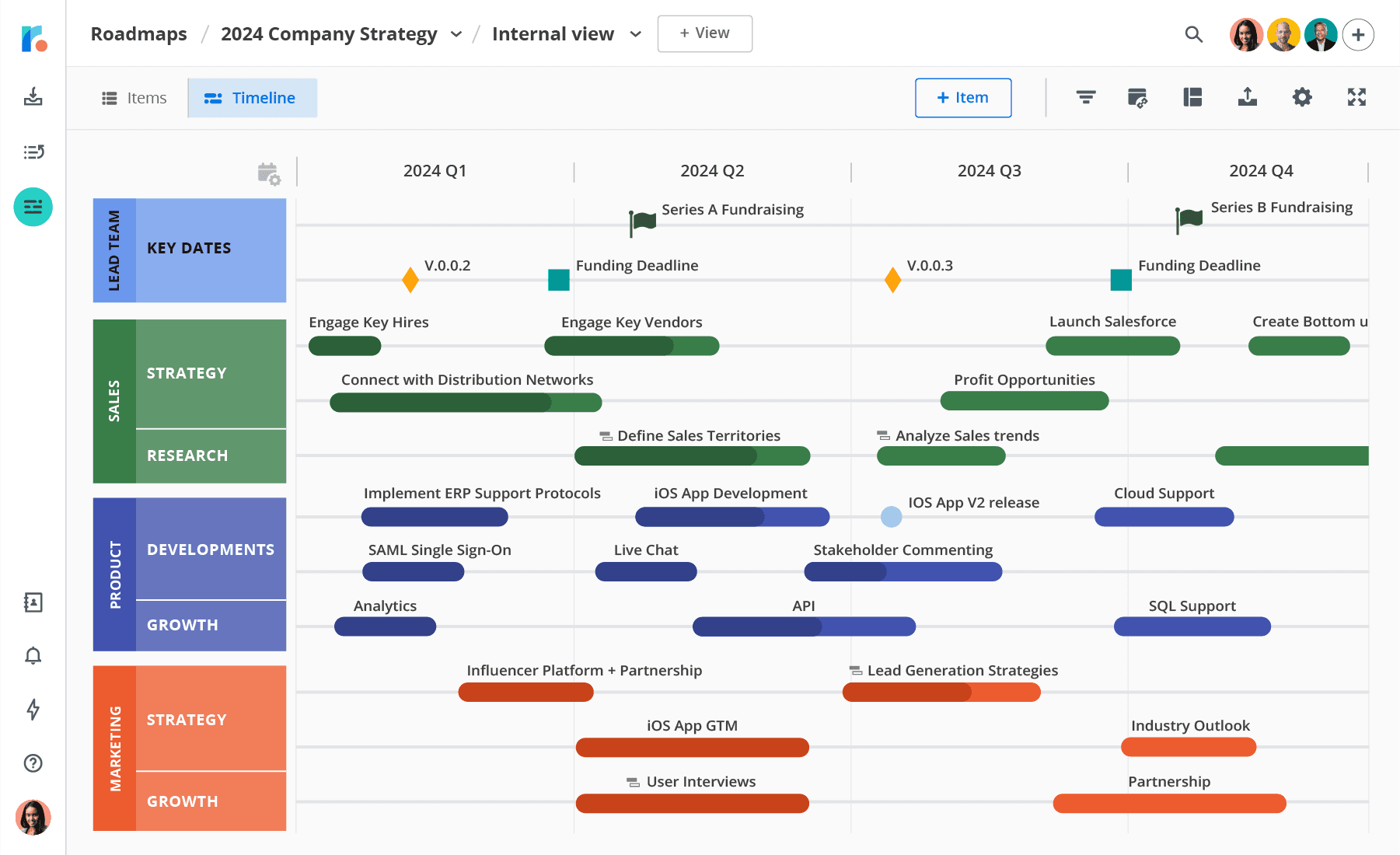
Roadmunk is a roadmapping tool designed to help product managers create beautiful and collaborative roadmaps. It offers a variety of templates and customization options.
Key features
Multiple Views: Switch between timeline, swimlane, and table views.
Prioritization: Use built-in scoring systems to prioritize features.
Feedback Management: Collect and integrate customer feedback directly into your roadmap.
Sharing Options: Share roadmaps with stakeholders via secure links or export them as PDFs and PowerPoint presentations.
Best for
Product managers who need a dedicated roadmapping tool with strong visualization and feedback integration features.
Productboard
Productboard
Productboard is a product management system designed to help teams get the right products to market faster. It combines roadmapping with customer feedback and prioritization features.
Key features
Customer Feedback Integration: Centralize feedback from various sources and link it directly to features on your roadmap.
Prioritization Frameworks: Use built-in prioritization frameworks to determine what to build next.
Customizable Roadmaps: Create custom roadmaps tailored to different audiences, such as executives, development teams, or customers.
Collaboration: Collaborate with team members and stakeholders to ensure alignment and transparency.
Integrations: Connects with popular tools like Jira, Slack, and Trello to streamline workflows.
Best for
Product managers who want to integrate customer feedback into their roadmapping process and need robust prioritization capabilities.
Take-aways
By leveraging these tools, product managers can create more effective, collaborative, and visually appealing roadmaps. Choose the one that best fits your team’s needs and workflow to ensure your product development efforts are well-coordinated and aligned with your strategic goals.
Common pitfalls and how to avoid them
Creating and maintaining a product roadmap can be a complex task, with plenty of opportunities for missteps. Here are some common pitfalls that product managers often encounter, along with strategies to avoid them.
Lack of clear vision
Without a clear vision, your roadmap can become a collection of random features and tasks rather than a coherent plan.
How to avoid
Define Your Vision: Clearly articulate the long-term vision and strategic goals for your product.
Align Roadmap with Vision: Ensure every item on your roadmap aligns with your overall vision and strategic goals.
Communicate Vision: Regularly communicate the vision to your team and stakeholders to keep everyone aligned.
Over-commitment
Promising too many features or updates can lead to missed deadlines and disappointed stakeholders.
How to avoid
Prioritize Wisely: Use prioritization frameworks to determine which features will provide the most value. Set Realistic Goals: Be realistic about what your team can achieve within the given time frame. Buffer Time: Include buffer time in your roadmap to account for unexpected delays or issues.
Ignoring customer feedback
Failing to incorporate customer feedback can result in a product that doesn’t meet user needs.
How to avoid
Collect Feedback: Regularly gather feedback from customers through surveys, interviews, and support tickets. Integrate Feedback: Use tools like Productboard or Released to integrate customer feedback directly into your roadmap. Prioritize Feedback: Prioritize feedback based on impact and feasibility to ensure you’re addressing the most critical needs.
Inflexibility
A rigid roadmap can make it difficult to adapt to changes in the market or new information.
How to avoid
Regular Reviews: Regularly review and update your roadmap to reflect changes in priorities or new insights. Agile Approach: Adopt an agile approach to roadmapping, allowing for continuous improvement and iteration. Feedback Loops: Establish feedback loops with your team to quickly identify and adapt to changes.
Overly detailed roadmaps
Creating a roadmap with too much detail can lead to micromanagement and lack of flexibility.
How to avoid
High-Level Focus: Keep your roadmap focused on high-level goals and milestones rather than detailed tasks. Flexibility: Allow room for adjustments and refinements as you gather more information. Iterative Planning: Use iterative planning to break down high-level goals into detailed tasks as you approach execution.
Lack of stakeholder buy-in
If stakeholders aren’t on board with your roadmap, it can lead to misalignment and lack of support.
How to avoid
Engage Stakeholders: Involve stakeholders early in the roadmapping process to gather their input and build buy-in. Transparent Communication: Maintain transparent communication about roadmap decisions and changes. Address Concerns: Actively address any concerns or objections from stakeholders to ensure alignment and support.
Not using the right tools
Using the wrong tools can make roadmapping cumbersome and inefficient.
How to avoid
Choose the Right Tools: Select tools that fit your team’s workflow and roadmapping needs. Integration: Ensure the tools you choose integrate well with other tools your team uses. Training: Provide adequate training to your team to ensure they can effectively use the roadmapping tools.
Failing to communicate the roadmap
If your roadmap isn’t communicated effectively, it can lead to confusion and misalignment.
How to avoid
Regular Updates: Regularly update stakeholders on the status of the roadmap and any changes. Visual Aids: Use visual aids (e.g., charts, graphs) to make the roadmap easy to understand. Accessible Format: Share the roadmap in an accessible format (e.g., PDFs, shared links) to ensure everyone can access it.
Take-aways
By being aware of these common pitfalls and proactively addressing them, product managers can create more effective and resilient roadmaps. This, in turn, leads to better alignment, improved execution, and ultimately, a more successful product.
Measuring the success of your product roadmap
For a roadmap to be truly successful, it must contribute to the overall success of the product. Here’s how to ensure alignment between your roadmap and product success
- Define Clear Objectives:
Strategic Alignment: Ensure that every item on your roadmap is aligned with the strategic goals of the product. This includes long-term vision, market positioning, and customer needs.
OKRs and KPIs: Use Objectives and Key Results (OKRs) and Key Performance Indicators (KPIs) to set clear, measurable goals for your roadmap. This helps in tracking progress and ensuring alignment with product success.
- Customer-Centric Planning
Voice of the Customer: Integrate customer feedback into your roadmap planning. Tools like Productboard or Released Hub can help in collecting and prioritizing customer feedback.
User Personas: Develop detailed user personas and ensure that roadmap items address the needs and pain points of these personas.
- Cross-Functional Collaboration
Stakeholder Involvement: Involve stakeholders from different functions (e.g., marketing, sales, customer support) in the roadmapping process. This ensures that the roadmap addresses the holistic needs of the product.
Regular Check-Ins: Schedule regular check-ins with stakeholders to review progress and gather feedback. This helps in maintaining alignment and making necessary adjustments.
- Agile and Iterative Approach
Flexible Planning: Adopt an agile approach to roadmapping, allowing for regular updates and iterations based on new information and feedback.
Continuous Improvement: Use retrospectives and feedback loops to continuously improve the roadmapping process. This ensures that the roadmap evolves in alignment with product success.
- Communication and Transparency
Transparent Updates: Regularly update your team and stakeholders on the status of the roadmap. Use visual aids and accessible formats to ensure everyone is on the same page.
Clear Documentation: Maintain clear documentation of the roadmap, including objectives, timelines, and progress. This helps in tracking alignment and making informed decisions.
- Outcome-Oriented Focus
Measure Outcomes, Not Outputs: Focus on the outcomes of roadmap items rather than just their completion. For example, instead of just tracking the release of a feature, measure its impact on user engagement or revenue.
Success Metrics: Define success metrics for each roadmap item and track these metrics to evaluate the impact on product success.
Take-aways
By tracking these key metrics and ensuring alignment between your roadmap and product success, you can create a strategic and effective roadmap that drives your product towards its goals. Regular measurement and adaptation are crucial to maintaining this alignment and achieving long-term success.
Public roadmap examples
GitHub: distinguish planning from feedback
The GitHub public roadmap represents roadmap items as issues, with labels for release phase, product area, and availability. Items without a timeframe can sit in an exploratory stage; delivery expectations become more specific as plans develop.
GitHub’s roadmap issues are read-only. Readers submit questions and suggestions through the separate public feedback discussions. A public plan and a feedback channel can work together without making every roadmap item an open discussion.
Apply it: show the confidence or stage of each item and give readers an explicit place to send feedback. Avoid making tentative work look like a commitment.
Microsoft: explain what release dates mean
Microsoft’s AI at Work roadmap provides descriptions and estimated release dates for commercial features across its work apps, Copilot, and agents. Microsoft states that the information can change, and that entries are removed when features become generally available, are cancelled, or are postponed.
Apply it: tell readers whether a date is an estimate and explain what happens to completed or cancelled work. Link shipped changes to release notes so customers can find the outcome after an item leaves the roadmap.
These are examples of communication choices, not evidence that a particular roadmap format caused either company’s commercial results.
Summary
We’ve discussed why product roadmaps are crucial and how to create and use them effectively. Here’s a quick recap.
Importance
Product roadmaps align your team, set priorities, communicate strategy, and track progress.
Types
Choose from goal-oriented, feature-based, time-based, Now/Next/Later, or theme-based roadmaps based on your needs.
Key Elements
Ensure clear objectives, prioritized features, flexible timeframes, and alignment with company strategy.
Steps to Build
Define your vision, gather input, prioritize, choose the right format, create the roadmap, and communicate it effectively using tools like Released Hub.
Best Practices
Keep it simple, be flexible, communicate regularly, involve your team, align with company goals, use data, prioritize ruthlessly, maintain transparency, focus on outcomes, and review regularly.
Public vs. Internal
Public roadmaps build trust with external stakeholders; internal roadmaps provide detailed plans for your team. Keep both aligned.
Tools
Use tools like Jira, Jira Product Discovery, Released Hub, ProductPlan, Aha!, Trello, Roadmunk, and Productboard for effective roadmapping.
Pitfalls
Avoid lack of vision, overcommitment, ignoring feedback, inflexibility, lack of buy-in, too much detail, wrong tools, and poor communication.
Measure Success: Track metrics like on-time delivery, customer satisfaction, revenue growth, and team morale. Ensure alignment with product success.
Next steps
Choose one customer outcome, identify the evidence behind it, and agree on the first problem to tackle. Review the plan with your team and explain what changed when priorities move.
For implementation, follow how to create a product roadmap in Jira. When you are ready to share it, use the Jira roadmap sharing guide. Compare the roadmap tools if you still need to choose your setup.
Additional resources
Finally, here are some valuable tools, templates, and further reading materials to help you master product roadmapping: