
Best product roadmap tools for your team
Compare Jira Product Discovery, Released Hub, Productboard, Aha!, ProductPlan, and lightweight roadmap tools by the work your team needs them to support.
On this page
What are the best product roadmap tools?
Product roadmap tools solve different jobs: some help teams discover and prioritise work, some coordinate portfolios, and some publish selected plans to customers. The best choice depends on where your source of truth already lives and who needs to use the roadmap.
For Jira teams, start with Jira Product Discovery for internal discovery and prioritisation. Add Released Hub when you need customer-facing roadmaps, feedback, and release communication from the same Jira data. Choose Productboard or Aha! when you need a standalone product-operations or portfolio-planning system, ProductPlan when roadmap presentation and sharing are the main problem, and a lightweight tool only when manual upkeep will remain manageable.
How we selected these roadmap tools
We chose products and approaches that represent the main decisions a product team faces: keep discovery in Jira, add a customer communication layer, adopt a dedicated product-operations platform, use a specialist roadmap product, or maintain a lightweight visual plan.
We compared planning ownership, prioritisation, external sharing, customer feedback, delivery integration, and the administration required to keep roadmap data current. We did not rank products by the number of roadmap views alone, because a capable roadmap that nobody maintains is still the wrong choice.
Start with the job the tool needs to do
Before comparing feature lists, answer these questions:
- Where will strategy and delivery data live? A second product system can be valuable, but it needs clear ownership and an integration plan.
- Who is the roadmap for? Leadership, engineering, customers, and partners need different levels of detail.
- What happens to customer feedback? Decide whether it needs a dedicated repository, a link to product ideas, or a lightweight communication path.
- How much governance do you need? Account for permissions, field mappings, publishing controls, and the person responsible for keeping the view current.
Product roadmap tools compared
Scroll horizontally to compare all columns.
| Tool or approach | Best when | Planning system | External communication | Consider first |
|---|---|---|---|---|
 Jira Product Discovery Jira Product Discovery | Your product team already works in Atlassian and needs to capture, prioritise, and connect ideas to delivery work. | Jira Product Discovery owns discovery; Jira owns delivery. | Published views for internal or external audiences; viewers can filter and sort without editing the plan. | Whether its views and participation model meet each audience’s needs. |
 Released Hub Released Hub | Jira or Jira Product Discovery is already the source of truth, and you need a customer-facing roadmap, feedback, and release communication. | Jira remains the source of truth. | Branded portals, tailored board and timeline views, feedback, and release notes. | Released Hub is a communication layer, not a replacement for standalone portfolio planning. |
 Productboard Productboard | You need a dedicated product workspace for feedback, prioritisation, and product operations. | Productboard owns product discovery and planning; Jira owns delivery. | Product Portals and published roadmaps. | Which fields and statuses should sync with Jira, and who owns the integration. |
 Aha! Aha! | You need broad standalone strategy and portfolio-planning capability. | Aha! owns strategy and portfolio planning; Jira can own delivery. | Configurable roadmaps and idea portals. | The operating model and administration needed alongside Jira. |
 ProductPlan ProductPlan | The priority is a purpose-built, shareable roadmap with views for different stakeholders. | ProductPlan owns the presentation and planning layer. | Tailored roadmap views for different audiences. | Whether a separate planning layer is worth maintaining next to delivery tools. |
| Lightweight tools | Your team needs a simple visual planning view and can manage the process without specialist product workflows. | A document, board, canvas, or spreadsheet owns the plan. | Shared links or exported views. | Whether manual upkeep will remain workable as teams, dependencies, and audiences grow. |
Jira Product Discovery
Best for Jira-first discovery and prioritisation
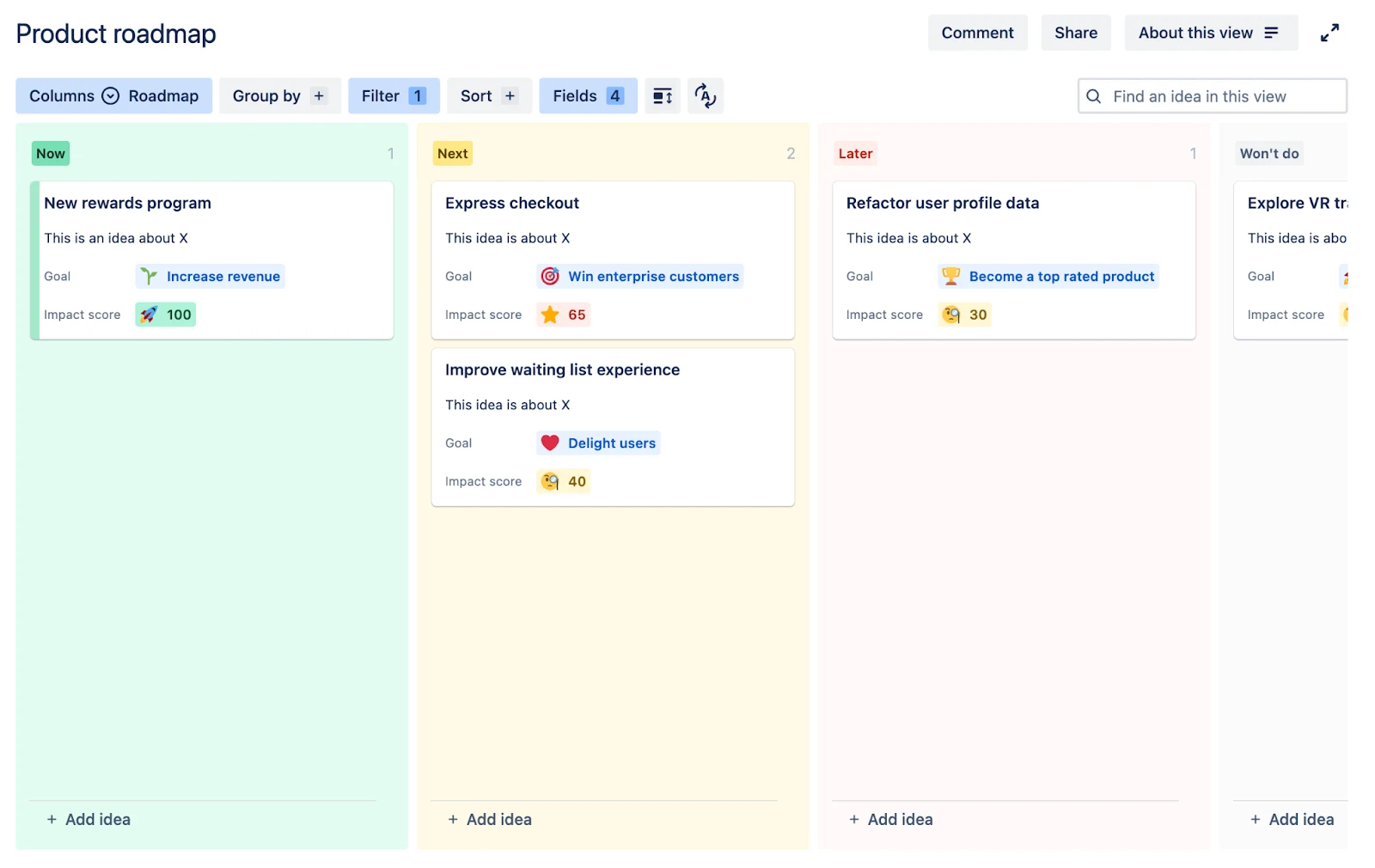
Use it when: your product team already plans delivery in Jira and wants discovery, prioritisation, and delivery links in the same system.
What it handles well: it keeps ideas, evidence, prioritisation, and linked delivery work close together instead of creating another product database. Teams can use custom fields and scoring to prioritise, then present the same ideas in list, matrix, board, timeline, and roadmap views. Published views can also be shared with stakeholders outside your organisation through a link.
Check before adopting: decide whether published views provide the customer experience, feedback workflow, and release communication your external audience needs.
Typical setup: a product team captures requests and evidence in Jira Product Discovery, scores the options there, then creates or links Jira work only after an idea is prioritised.
Read more: how to publish Jira Product Discovery roadmaps.
Released Hub
Best for customer-facing communication from Jira
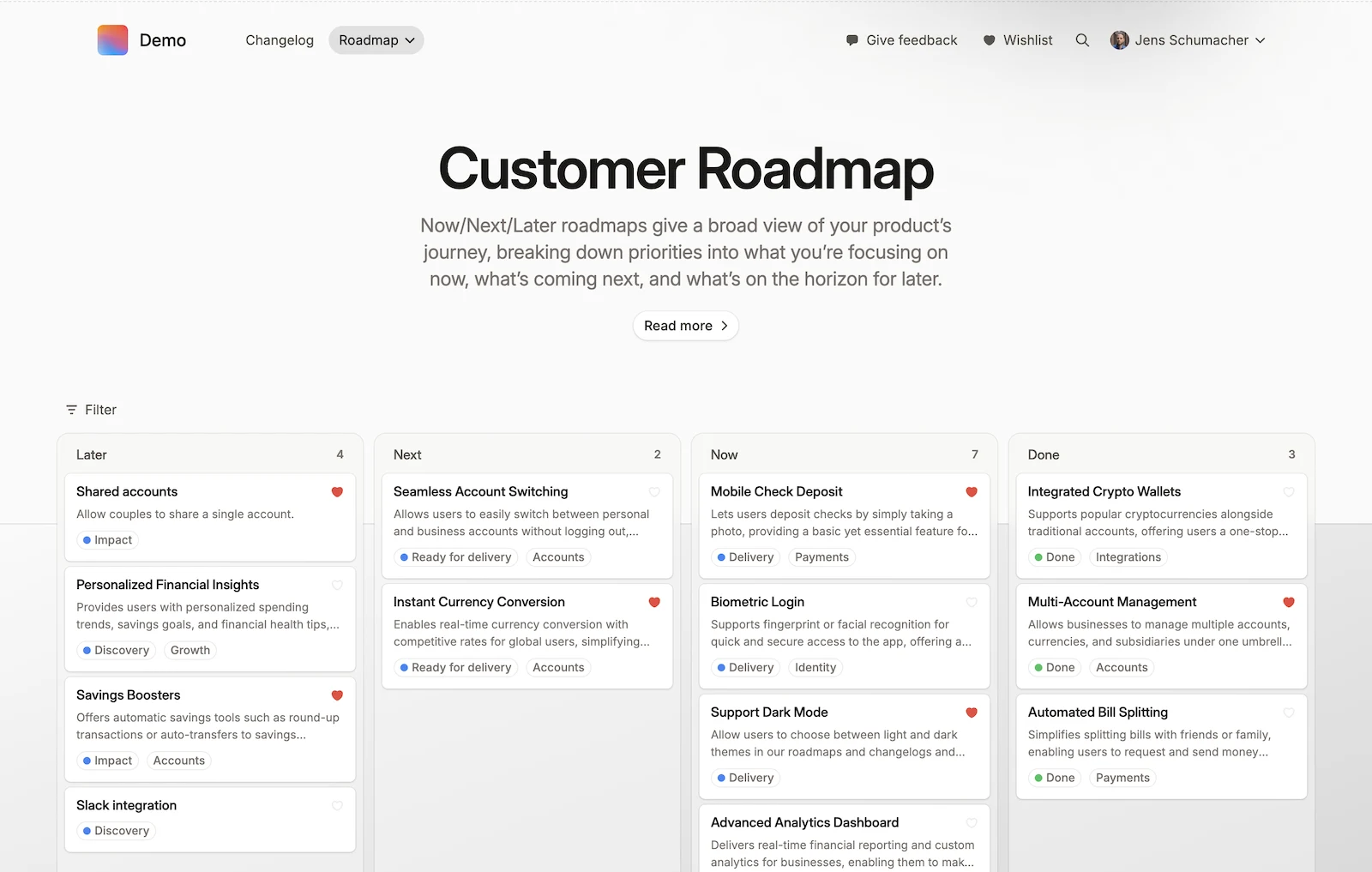
Use it when: the product plan and delivery work already live in Jira or Jira Product Discovery, but customers and stakeholders need a curated view.
What it handles well: it creates a customer-facing layer around selected Jira work: publish a tailored board or timeline, collect feedback, and explain what shipped without recreating the roadmap in another product database. Feedback left on Released Hub roadmap items can be linked to the corresponding Jira work item.
Check before adopting: Released Hub is a communication layer, not a standalone portfolio-planning system. Feedback can be collected through the portal and, on the appropriate plan, dedicated embedded forms; confirm which experience and access model your audience needs.
Typical setup: an internal team continues to plan in Jira, then publishes selected work to a customer roadmap and uses the linked feedback to inform future prioritisation.
Explore Released Hub roadmaps, read the feedback documentation, or compare Released Hub and Productboard and Released Hub and Aha!.
Productboard
Best for a dedicated product workspace
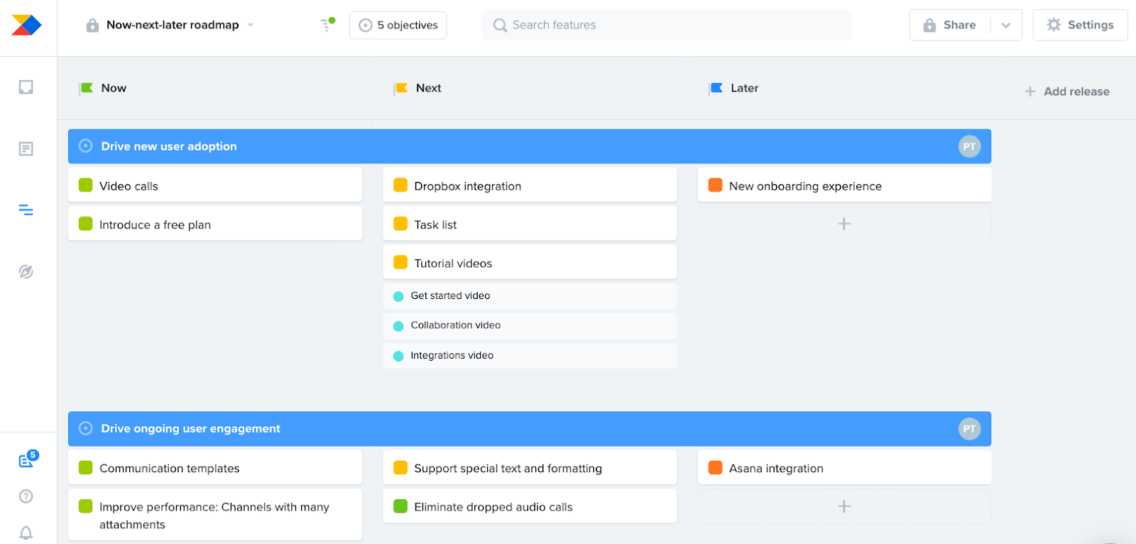
Use it when: customer evidence, prioritisation, and product operations need their own dedicated workspace rather than living entirely in Jira.
What it handles well: Productboard can push prioritised features to Jira, import existing Jira work, map fields, and synchronise selected fields and statuses in both directions. It also supports JQL-based ongoing imports and maps features and subfeatures to Jira work.
Check before adopting: define the source of truth, mapped fields, sync direction, and who resolves exceptions before the integration becomes part of the team’s operating model.
Typical setup: product research and prioritisation live in Productboard; once a feature is approved, the relevant work is created or linked in Jira for delivery.
Read more: Productboard’s Jira integration guide.
Aha!
Best for broad strategy and portfolio planning
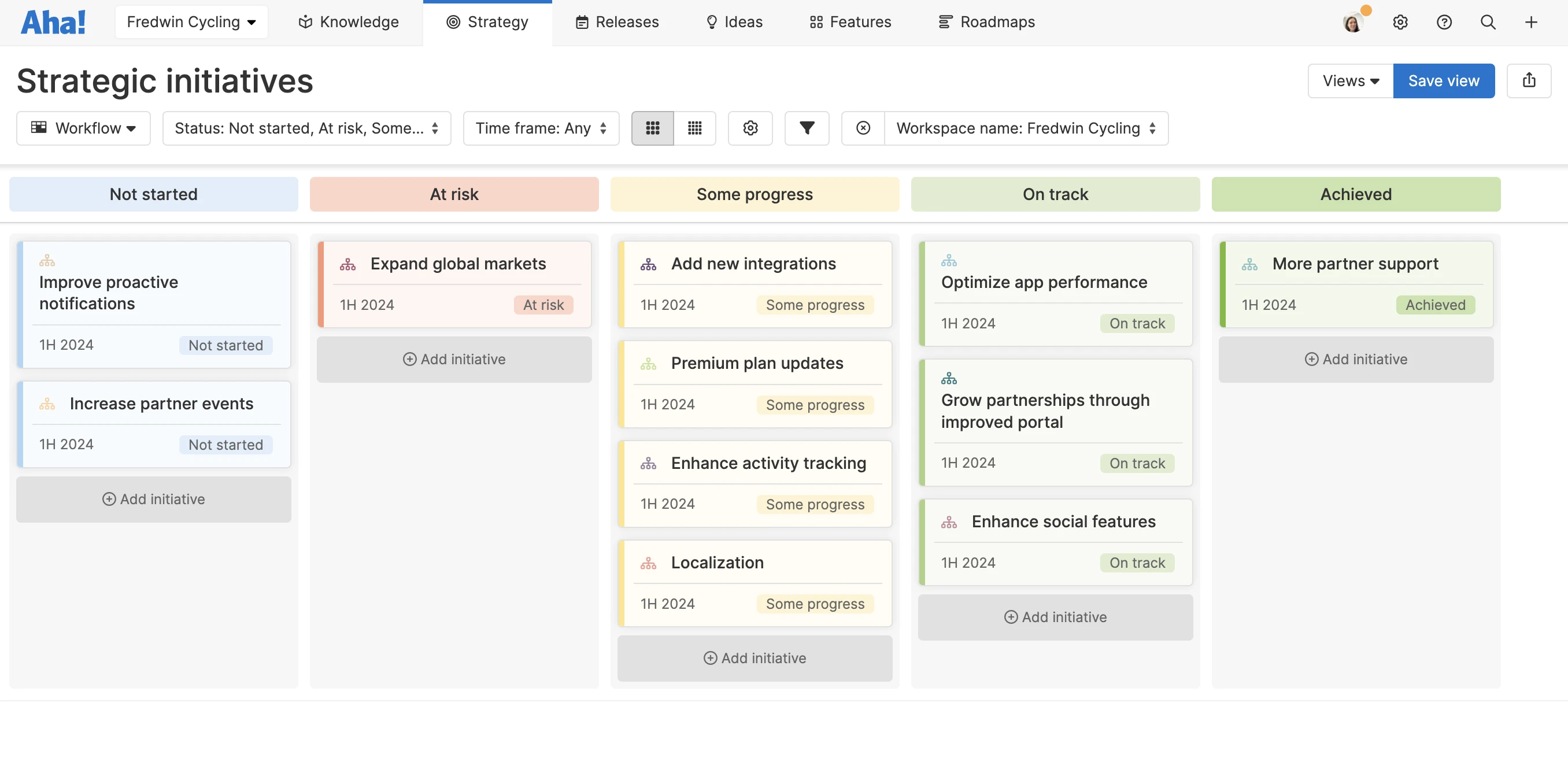
Use it when: your organisation needs a comprehensive, standalone operating model for strategy, portfolio planning, and delivery coordination.
What it handles well: it connects goals, initiatives, releases, dependencies, and portfolio visibility. Tailored roadmap views can serve different audiences, while portfolio views bring plans across products together.
Check before adopting: teams that already plan and deliver in Jira should weigh the extra planning depth against the governance, taxonomy, and administration of a separate system.
Typical setup: portfolio leaders review strategy and initiatives across products while individual product teams maintain the linked releases and delivery plans.
Read more: Aha! Roadmaps and Aha!‘s portfolio-roadmap guide.
ProductPlan
Best for purpose-built roadmap sharing
Use it when: the roadmap itself is the principal communication problem and a dedicated planning layer is justified.
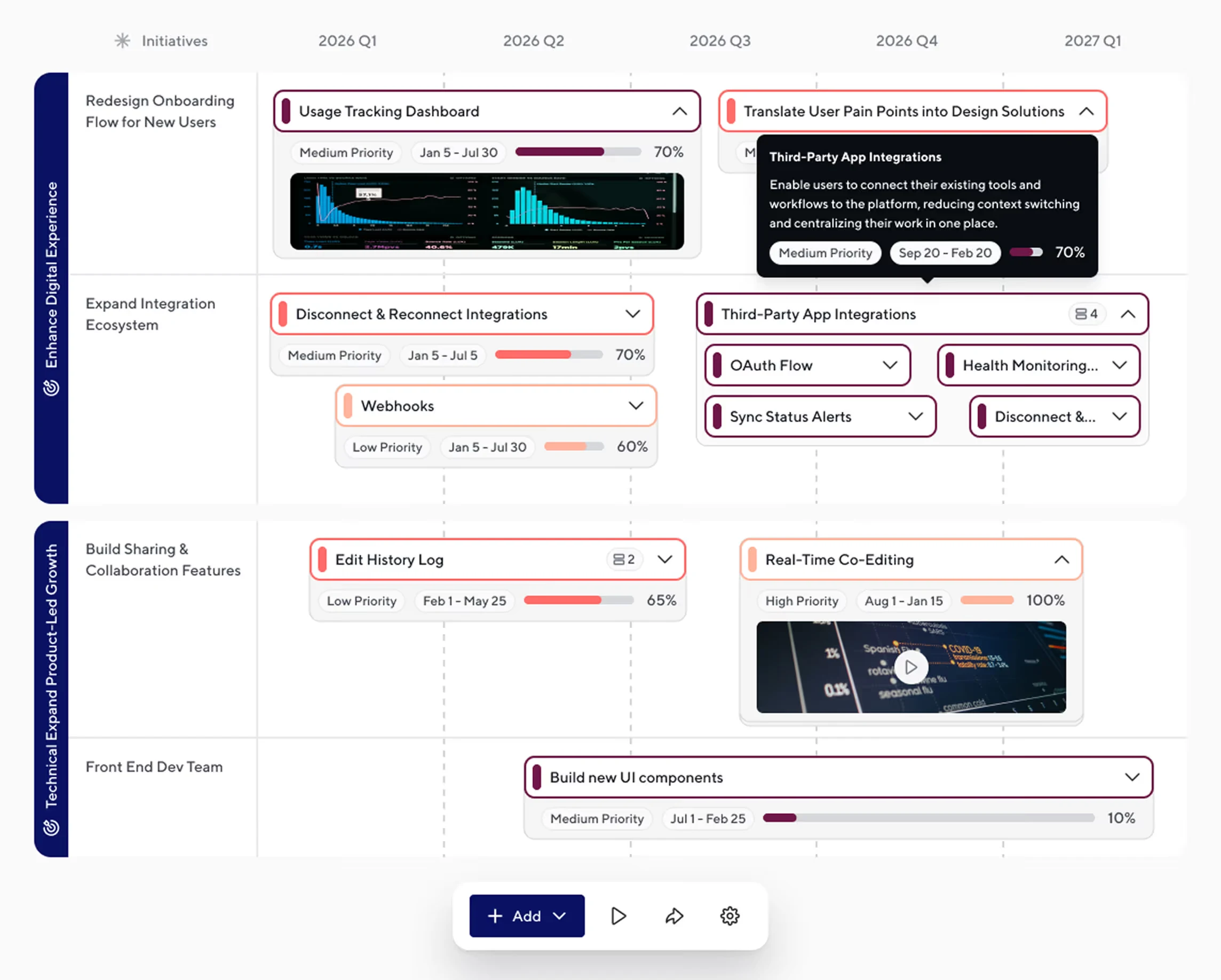
What it handles well: it centres live, shareable plans and different views for leadership, engineering, and external stakeholders. Its roadmap product includes timeline, list, table, custom, and portfolio views, plus native two-way Jira and Azure DevOps sync.
Check before adopting: confirm whether its collaboration, sharing, integration, and administration model fits the real workflow, and whether you also need a deeper discovery or feedback system.
Typical setup: product maintains one live plan, then gives leadership a portfolio view, engineering a delivery-oriented view, and sales or customers a tailored timeline.
Read more: ProductPlan roadmaps.
Lightweight tools
Best when the process is genuinely lightweight
Use it when: a small team has a simple roadmap, a clear owner, and primarily needs to make a plan visible rather than run specialised product workflows.
What it handles well: Notion, Airtable, Miro, and spreadsheets are quick to start, flexible, and often enough for a basic visual plan.
Check before adopting: decide how updates, feedback, dependencies, delivery status, and audience-specific views will be maintained. Manual upkeep often becomes the problem as teams and audiences grow.
Typical setup: one named owner updates a Now/Next/Later view after a weekly planning session and shares the same view with the people who need it.
If Notion is on your shortlist, our Jira vs Notion comparison looks beyond the roadmap to task structure, permissions, sprints, and the work of maintaining the system.
A practical choice for Jira teams
For many Jira teams, the decision is not between a “good” and “bad” tool. It is whether Jira Product Discovery should remain the planning system and whether customers need a communication layer separate from the internal workspace.
Keep discovery and delivery in Jira Product Discovery and Jira when that is where your team already prioritises ideas and manages execution. Add Released Hub when you need to publish a tailored roadmap, collect customer feedback, and communicate releases from that same work. Choose Productboard, Aha!, or ProductPlan when the team genuinely needs the separate product-management or planning model those tools provide.
Already plan in Jira Product Discovery? See how Released Hub roadmaps turn Jira work into a customer-facing roadmap without making the team maintain a second product database.
Common questions
What is the best product roadmap tool for Jira teams?
Do Jira teams need a separate roadmap tool?
Should a public roadmap include dates?
How can we avoid maintaining two product databases?
Sources
Updated 21 September 2026 against first-party product documentation. Released makes Released Hub. This is a workflow-based shortlist, not a new hands-on test of every product.